
Every Order Through a Delivery App Is a Guest You Paid to Meet and May Never See Again.
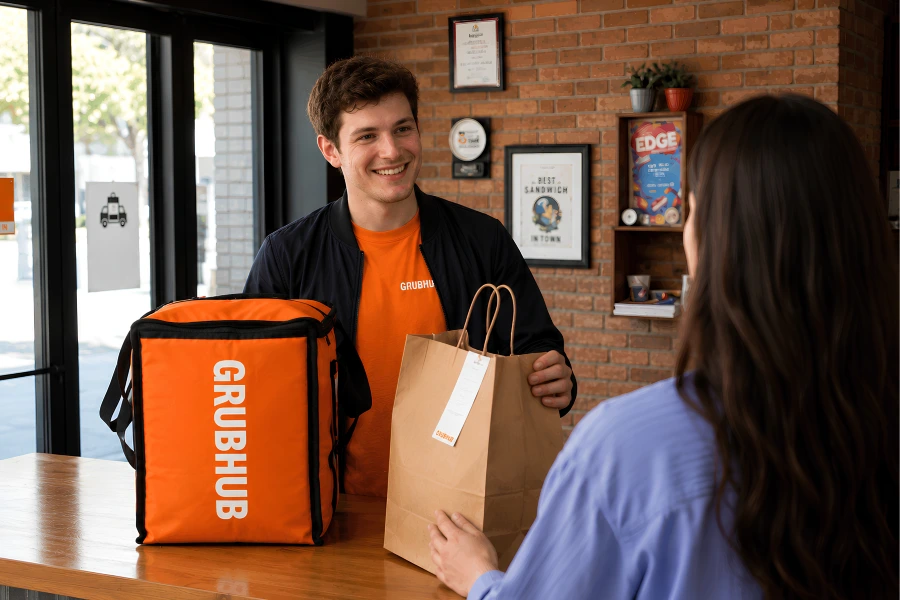
Third-party delivery platforms solved a real distribution problem for NYC restaurants a decade ago, and the commission structure that made that distribution possible, typically 15 to 30 percent of every order, has not gotten any friendlier since. At My Chef Social, the operators reassessing their delivery strategy this year are not abandoning delivery as a channel. They are recognizing that a third-party platform owns the guest relationship, the data, and the repeat-order habit that platform generates, while the restaurant absorbs the margin cost of acquiring that guest in the first place, over and over again, with no compounding return.
This piece extends the financial discipline covered in our weekly restaurant P&L review guide into a channel-specific decision, and it connects forward to the retention infrastructure covered in our companion piece on restaurant loyalty programs in 2026: the guest data a restaurant reclaims by shifting toward direct ordering is only valuable if there’s a system in place to act on it.
The Real Cost of Third-Party Delivery Commission Structures
A 25 percent commission on a delivery order does not simply reduce the margin on that single transaction. Applied against a food cost already running 28 to 35 percent, plus packaging, plus the labor of preparing an order that generates no dine-in seat turn or beverage attach rate, a delivery order routed through a third-party platform can leave a restaurant with single-digit margin or less on a transaction that looks like healthy top-line revenue on a sales report. Our guide on reducing food waste and protecting restaurant profit margins covers exactly this kind of hidden margin erosion: a number that looks fine in isolation and only reveals its true cost when reviewed against the full cost structure behind it.
What Restaurants Are Building Instead
1. A Direct Ordering System on the Restaurant’s Own Website
A modern, mobile-first ordering system embedded directly on the restaurant’s own website, covered in detail in our restaurant website design guide, eliminates the commission entirely on any guest who orders directly rather than through a third-party app. The upfront investment in a properly built ordering system pays for itself quickly against the ongoing commission cost of routing the same order volume through a third party indefinitely.
2. A Delivery Fleet Strategy That Fits the Restaurant’s Actual Volume
Not every restaurant needs an in-house delivery team, but many overestimate the complexity of managing one at a moderate volume. A hybrid approach, direct ordering with an in-house or contracted delivery option for a defined radius, combined with continued third-party platform presence for guests who specifically search within that platform’s app, captures both channels without over-committing operationally.
3. Guest Data Capture at the Point of Direct Order
Every direct order is an opportunity to capture a guest’s contact information and order history in a system the restaurant actually owns, rather than data locked inside a third-party platform’s dashboard. This is the foundation of the restaurant CRM work that turns a single delivery transaction into a guest relationship a restaurant can market to directly, at no ongoing commission cost, for every future order.
4. A Migration Incentive That Moves Guests Off the Platform Without Discounting the Core Menu
The most effective migration strategies do not discount the menu to compete with a platform’s promotional pricing. They add specific value to the direct-order channel instead: a free item, priority prep time, or an exclusive menu item unavailable through third-party platforms, following the same value-over-discount logic covered in our restaurant pricing strategy guide.
5. Technology That Reconciles Delivery Revenue Accurately
Reconciling third-party platform payouts against actual order volume is a commonly underestimated source of margin leakage, as covered in our restaurant technology guide. Restaurants running any meaningful delivery volume through a third party should have automated reconciliation in place regardless of whether they’re actively working to shift volume toward direct ordering.
6. Treat Off-Premise Revenue as a Portfolio, Not a Single Channel
Delivery is one piece of a broader off-premise revenue picture that also includes catering, private events, and corporate accounts. Our guide on catering as a revenue channel for NYC restaurants covers a version of off-premise revenue that carries none of the commission drag delivery apps impose, and the same guest-data-capture discipline that applies to direct ordering applies just as directly to catering clients.
Third-Party Delivery vs. Direct Ordering: The Margin Comparison
Channel | Typical Commission | Guest Data Ownership | Repeat-Order Potential |
Third-party delivery platform | 15–30% per order | Owned by the platform | Limited, platform controls the relationship |
Direct website ordering | None, or minimal payment processing fee | Owned by the restaurant | High, restaurant can market directly to the guest |
Figures reflect general, widely reported third-party delivery commission ranges. Confirm current rates against your specific platform agreements, since terms vary and are subject to change.
Ready to build a direct ordering system that keeps more of every dollar and captures every guest relationship?
The restaurant website design and restaurant CRM team at My Chef Social builds the ordering, capture, and retention infrastructure that reduces reliance on third-party commission structures.
A Final Word: The Platform Was Never Going to Build Your Guest Relationships for You
Third-party delivery apps are not the enemy. They solved a genuine distribution and discovery problem, and for many restaurants, they still play a role in reaching guests who would not otherwise find them. The mistake is treating that platform relationship as a complete guest acquisition strategy rather than one channel among several, with the restaurant’s own website, ordering system, and guest database sitting at the center of the strategy rather than at its periphery.
At My Chef Social, we help NYC restaurants build the direct ordering and retention infrastructure that keeps guest relationships and the margin they generate in the restaurant’s own hands.
Book your free growth audit today
Frequently Asked Questions
Should NYC restaurants stop using third-party delivery apps entirely?
Not necessarily. Third-party platforms still provide genuine discovery value for guests who are not already familiar with a restaurant. The more effective approach is reducing over-reliance on the channel by building a direct ordering system alongside it, rather than eliminating third-party delivery outright.
How much do third-party delivery commissions actually cost a restaurant?
Commission rates typically range from 15 to 30 percent per order, depending on the platform and service tier. Applied against an already-compressed food cost percentage, this can leave a delivery order with a single-digit margin or less once packaging and labor are factored in.
What is the first step toward reducing delivery app dependency?
Build a functional, mobile-first direct ordering system on the restaurant’s own website first. This gives guests a genuine alternative to the third-party app and starts capturing guest data the restaurant can use for future marketing, rather than data that remains locked inside the platform’s own dashboard.
Should restaurants discount their menu to compete with delivery app promotions?
No. A more effective migration strategy adds specific value to the direct-order channel instead of discounting, such as a free item, priority preparation, or an exclusive menu item unavailable through third-party platforms.
How does reducing delivery app reliance connect to a restaurant’s broader retention strategy?
Every direct order captured outside a third-party platform is a guest relationship the restaurant can market to directly at no ongoing commission cost. This data becomes significantly more valuable once it feeds into a structured loyalty or CRM follow-up system, rather than sitting unused after a single transaction.