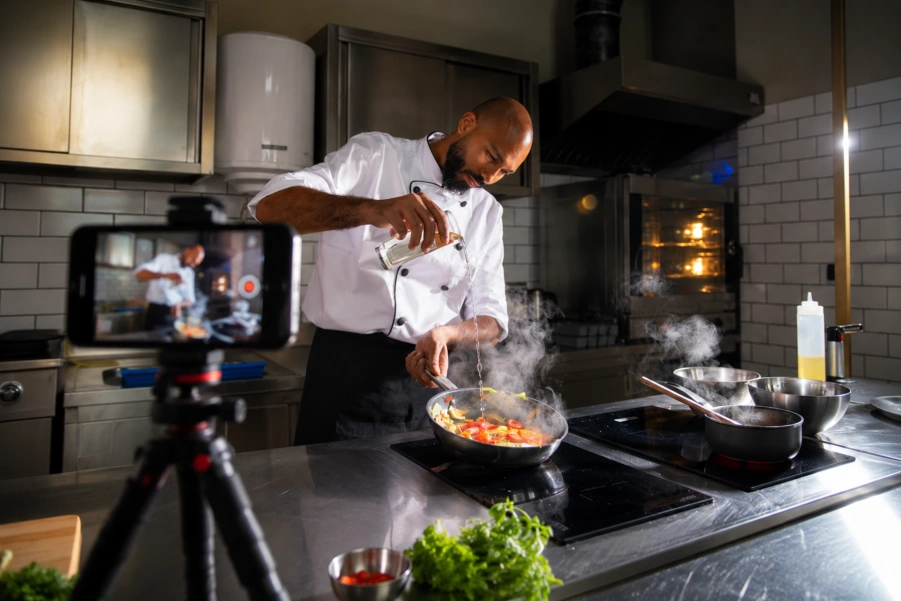
A lot of restaurants are still budgeting for polished, professionally shot content while their own front-of-house team could be producing something that performs better for a fraction of the cost. Employee-generated content, video and photos made by the people who already work in your restaurant, has become one of the more reliable performing formats in hospitality social media, and most NYC restaurants haven’t touched it yet.
What’s actually changed
Consumers are telling brands directly that they want more human, less produced content. According to Sprout Social’s research into content strategy trends, human-generated content is the single thing consumers most want brands to prioritize going into this year, ahead of higher production value or more frequent posting. That preference shows up clearly in how audiences respond to employee-facing content versus studio-produced brand content: people tend to trust and engage with the person doing the job more than they trust a perfectly lit product shot.
This isn’t a theoretical shift. Starbucks has piloted a program putting baristas in front of the camera through a dedicated creator network, paying employees to produce content the company then amplifies through paid promotion. That’s a large, cautious, brand-safety-obsessed company deciding that its own staff, not outside creators, are worth investing in as a content source. Smaller restaurants can apply the same logic without needing a formal program or a paid stipend structure.
The broader picture in hospitality social media backs this up too. Nano and community-level creators, the kind of scale a restaurant’s own staff naturally operates at, have been shown to generate meaningfully higher engagement rates than larger, more polished influencer accounts. The advantage isn’t reach. It’s believability.
Why this works better than it sounds
A server explaining their actual favorite order, in their own words, on their phone, reads as more credible than the same message delivered through a scripted brand voice. Bartenders talking through a drink they genuinely like making, kitchen staff showing a prep step they’re proud of, hosts giving an honest read on the busiest night to book: none of this requires a production budget, and all of it tends to feel less like an ad. It also solves a real operational problem. Restaurants often struggle to produce content consistently because they’re relying on one person, usually the owner or a manager, to be both the operator and the content team. Spreading that responsibility across a few willing staff members, even informally, turns content production from one person’s constant chore into something the whole team contributes to in small pieces.
There’s a retention benefit hiding in here too, one that’s easy to overlook. Staff who are given a small platform and creative say in how their restaurant shows up online tend to feel more invested in the place, not just as an employer but as something they helped shape publicly. That’s a soft benefit, not something to promise or measure directly, but it’s worth knowing it exists alongside the marketing upside.
This is different from your existing behind-the-scenes content
If you’ve already leaned into kitchen b-roll and general behind-the-scenes footage, this isn’t a replacement for that; it’s a different layer. General behind-the-scenes content shows what your restaurant looks like from the inside. Staff-led content puts a specific person’s voice and opinion into that footage. “Here’s our kitchen at 6 pm” and “here’s what I actually order when I’m not working” are both useful, but they’re not the same thing.
It’s also worth keeping separate from paid creator or influencer partnerships. An outside food creator brings their own audience and their own credibility. Your own staff bring something an outside creator can’t: they’re actually there every night, and regulars often already know them by name. A guest who’s seen the same bartender in a dozen Reels and then walks in to find that same person actually working the bar experiences a kind of consistency an outside creator can never offer.
A simple way to start without overhauling anything
You don’t need a formal employee content program to test this. A few reasonable starting points:
- Ask one or two staff members who already seem comfortable on camera if they’d want to try a quick, informal video, on their own terms, about something they genuinely like on the menu or in the bar program.
- Keep the first attempts low-pressure and short. A fifteen-second clip of a bartender naming their favorite order works better than a scripted minute-long segment nobody wants to redo five times.
- Be honest with staff about whether and how they’ll be compensated or credited if this becomes a regular thing, before it becomes a regular thing. Even a small, clearly stated arrangement, a modest per-video bonus or simply crediting them by first name in the caption, avoids the awkwardness of an unspoken expectation.
- Rotate who’s featured rather than relying on the same one or two staff members every time. This keeps the format fresh and avoids putting all the pressure, and all the visibility, on a single employee.
- Track which staff-led posts actually perform, the same way you’d track any other content, and let that data guide who gets asked to do more, rather than assuming seniority or role should decide it.
Where this fits into your content strategy
This is a genuinely lower-cost content lever, which matters if content production budget is a real constraint. It sits alongside, rather than replaces, existing behind-the-scenes content ideas and any outside creator or influencer partnerships you’re already running. The three can coexist on the same content calendar without competing for the same slot.
If your team is already producing batched short-form video, staff-led clips are one of the easiest formats to add into that same production day, since they need almost no setup beyond a phone and a willing team member.
Frequently Asked Questions
Do I need to pay staff extra to feature them in content?
Not necessarily, but be clear about it either way. A small, clearly stated arrangement, whether that’s a modest per-video bonus or simply crediting them by name, avoids the awkwardness of an unspoken expectation once this becomes a regular thing.
What if my staff aren’t comfortable on camera?
Don’t force it. Start with the one or two people who already seem naturally at ease, and let participation stay voluntary. Forced or visibly uncomfortable content undermines the authenticity that makes this format work in the first place.
How is this different from paying an outside influencer?
An outside creator brings their own audience and credibility but isn’t actually in your restaurant every night. Your own staff brings a consistency an outside creator can’t: a guest who sees a bartender in a Reel can walk in and find that same person actually working the bar.
Do I need professional equipment to start?
No. A phone and a willing team member are enough. A fifteen-second clip of a bartender naming their favorite order tends to outperform an overly produced segment nobody wants to redo multiple times.
How do I know if staff-led content is actually working?
Track engagement on staff-led posts the same way you track any other content, and let that data, not assumptions about seniority or role, guide who gets asked to create more.