Why Does Fashion Week Move the P&L, Not Just the Guest Count?
Fashion Week doesn’t just fill seats – it changes who is sitting in them. Brand teams, editors, and buyers book private dining rooms and full restaurant buyouts for launch dinners, showroom previews, and after-show receptions, and they pay premium minimums to secure a room for a single night. For a downtown restaurant, one well-placed Fashion Week buyout can generate more margin than a full week of standard dinner service, provided the deal is structured around a guaranteed spend rather than a per-cover discount.
Operators who track weekly numbers already know this pattern from other high-volume windows – the same logic behind tracking weekend covers against actual profitability applies here: a room that’s technically full isn’t automatically a room that’s profitable. Fashion Week only pays off if the check average and buyout minimum are set before the first email goes out to a publicist, not negotiated after a brand’s events coordinator has already anchored on a lower number.
Which Neighborhoods Actually See the Fashion Week Spike?
The Official NYFW Schedule confirms runway presentations and industry events running Thursday, September 10 through Tuesday, September 15, 2026, with the bulk of designer showrooms, brand activations, and after-parties concentrated downtown rather than at the runway venues themselves. Restaurants closest to this activity see the earliest and highest-value inquiries:
- SoHo – showroom previews and press-day lunches; generally smaller parties of 10–20 guests, but frequent and repeat bookings across the week
- Tribeca – brand launch dinners and editor dinners, typically the highest check averages and most likely to request a full buyout
- West Village and Meatpacking – after-show receptions and late-arriving VIP tables, often booked with only a few days’ notice
- Financial District – a smaller but growing share of activations tied to showroom space south of Chambers Street
A restaurant’s exact address inside these zones matters more during Fashion Week than almost any other week of the year, which is part of why neighborhood-specific dining strategy needs to be built into the pitch, not bolted on afterward.
How Do Restaurants Actually Get Booked for These Parties?
Brand teams and their PR agencies build Fashion Week venue lists in July and finalize them in the first two weeks of August, well before the show schedule is public. Restaurants that wait until September to reach out are pitching into a calendar that has already closed. The outreach sequence that consistently works:
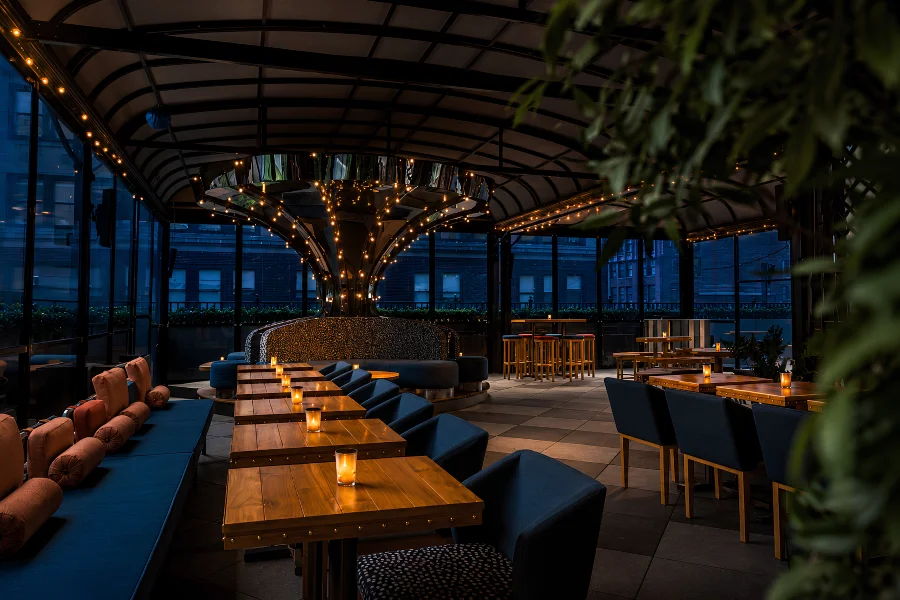
- Build a one-page buyout kit – room capacity, food and beverage minimum, available dates, and photos of the space set for a private event, not standard service.
- Send it directly to fashion PR agencies and brand events teams, not general inquiries – the same agencies rebook the same restaurants season after season once a relationship exists.
- Quote a minimum spend, not a per-person price – buyout economics only work when the restaurant is compensated for the lost walk-in revenue of a normal night.
- Confirm dates by August 15 – this mirrors the same lead time restaurants need for holiday party bookings, where venues that wait get left with the leftover dates.
This cadence extends to catering and private event revenue generally: Fashion Week is simply the highest-margin version of a booking pattern restaurants should already be running for corporate and press events year-round.
What Should the Room and Menu Actually Look Like?
Brand teams booking a Fashion Week dinner are paying for an experience they can photograph and talk about, not a discount. A tasting format or a chef’s-counter setup built around a defined experience tends to outperform a standard prix fixe, because it gives the brand a built-in visual moment for their own content. Restaurants should resist discounting the private event rate to win the booking – pricing on value rather than discounting protects the exact margin this window is meant to deliver, and a lower rate signals lower exclusivity to the next agency shopping the same venue list.
How Should Restaurants Market Availability Without Overspending?
Most of the work here isn’t paid media – it’s direct outreach and content that documents the room. A few channels still matter:
- Short, unpolished video of the space set for a private event tends to outperform a produced brand reel, following the same pattern covered in behind-the-scenes content ideas for NYC restaurants.
- Paid social should support outreach, not replace it – a properly structured Meta ad campaign aimed at event planners and PR coordinators can put a buyout kit in front of the right inbox, but it won’t close the deal alone.
- Influencer spend is the wrong line item here – the objective is booking a brand’s private event, not generic foot traffic, and budget spent chasing influencer posts rarely reaches the people actually deciding on venues.
How Does One Fashion Week Table Become a Year-Round Regular?
The editors, stylists, and brand staff who fill a Fashion Week buyout are exactly the guests worth retaining past the week itself. Capturing contact information at the event — not just processing a card payment – is what allows a restaurant to follow up in October rather than losing the relationship once the week ends. This is the same guest retention logic that applies to any high-value first visit: the return rate on a follow-up sent within 30 days is dramatically higher than a cold re-approach months later. Restaurants with a working loyalty and CRM system can fold Fashion Week guests directly into existing outreach instead of treating the week as an isolated event.
What About Restaurants That Don’t Land the Boldface Names?
Not every restaurant in the downtown area will get a brand dinner. Almost all will see more people looking for a seat from out-of-town reporters, buyers and fans who want to eat between events. This is where having an online presence, not just personal connections makes the difference. A restaurant that has a Google Maps listing and manages its reputation well is much more likely to show up in a quick search like “where should we eat near Gotham Hall” than one that depends only on word of mouth. More and more that search is done through an AI assistant of a map app. That is why being visible to AI search is now part of the system as having a Google listing, not something separate.
Where to Start?
Fashion Week lasts five days. The restaurants that make the most from it are the ones that start preparing their outreach plan and confirm their schedule in the second week of August. My Chef Social creates the paid ads, social media posts, website and customer relationship management system that keeps a restaurant in the spotlight for event planners and ready to turn a Fashion Week booking into a customer. If your restaurant is located in the SoHo, Tribeca, West Village or Financial District area and you do not yet have a plan, for turning Fashion Week customers into regulars that is the conversation to have this week not in September, when the venue listsre already full and the next big booking opportunity is already starting behind it.
At My Chef Social, we help NYC restaurants build the reputation management systems that protect every other marketing investment they make.
Book your free growth audit today
FAQs
When should NYC restaurants start marketing for Fashion Week?
Restaurants should confirm buyout availability by mid-August. PR agencies and brand event teams typically finalize their venue lists in the first two weeks of August, before the official show schedule is public, so outreach sent in September is competing for whatever dates are left over.
Which NYC neighborhoods get the most Fashion Week restaurant bookings?
SoHo, Tribeca, the West Village, and Meatpacking District see the heaviest activity, since most showroom previews, brand dinners, and after-show receptions are booked downtown rather than near the official runway venues themselves.
Should a restaurant discount pricing to win a Fashion Week buyout?
No. Restaurants should quote a guaranteed minimum spend rather than a discounted per-person rate. A lower rate signals lower exclusivity to agencies rebooking the same venues each season, and it erodes the margin the buyout is meant to protect.
Do Fashion Week guests turn into repeat customers?
Only if the restaurant captures contact information at the event itself. Editors, stylists, and brand staff who fill a buyout are high-value repeat candidates, and a follow-up sent within 30 days converts at a meaningfully higher rate than a cold re-approach months later.
How can a restaurant benefit from Fashion Week without landing a brand dinner?
Restaurants without industry connections still see a spike in walk-in searches from out-of-town press and attendees. A clean Google Business Profile, consistent review responses, and AI search visibility determine which nearby restaurant actually gets chosen during that search.