
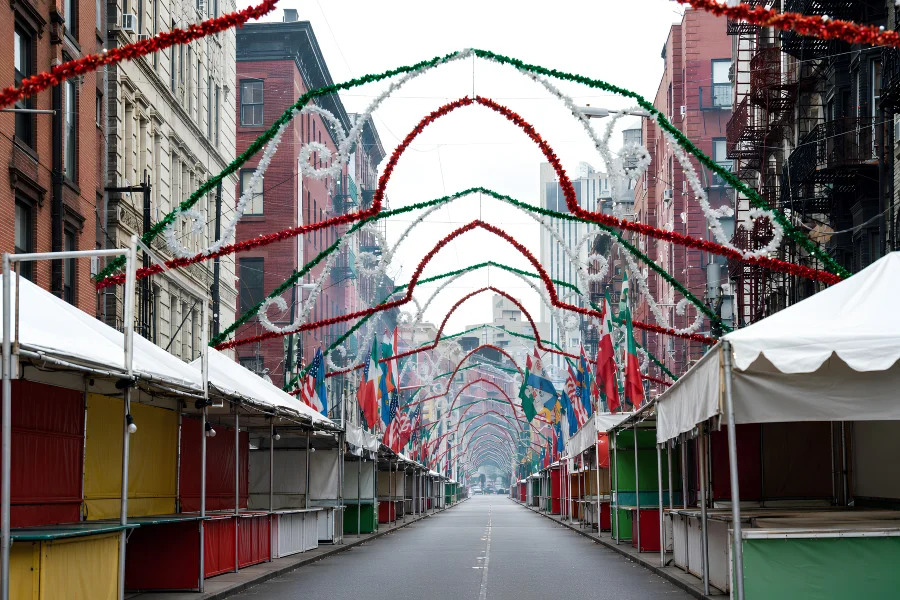
The Feast of San Gennaro started in 1926 as a one-day block party thrown by Neapolitan immigrants on Mulberry Street, in honor of the patron saint of Naples. In 2026, it turns 100. That milestone, combined with eleven straight days of dense foot traffic through Little Italy and Nolita, makes this one of the highest-value, lowest-competition marketing windows most restaurants in that part of Manhattan will get all year.
The dates and what’s actually happening
The 100th Annual Feast of San Gennaro runs from Thursday, September 17, through Sunday, September 27, 2026, centered on Mulberry Street between Houston and Canal, with the footprint extending to Hester Street between Baxter and Centre and part of Grand Street. September 19 is San Gennaro’s actual feast day and the festival’s religious center point, with a Solemn High Mass at the Shrine Church of the Most Precious Blood followed by a religious procession. The larger Grand Procession, when the statue is carried through Little Italy with bands, religious societies, community groups, and crowds lining the street, is scheduled for Saturday, September 26, at 2 p.m. The tradition of pinning monetary offerings to ribbons on the statue, connecting today’s festival back to its charitable origins, continues as part of that procession.
That’s eleven days of elevated foot traffic, food stalls, live music, and one of the most recognizable street festivals in the country landing in your neighborhood, whether your restaurant participates directly or not.
A hundred years of change worth understanding
The neighborhood the Feast started in isn’t the neighborhood it happens in now. Little Italy has shrunk considerably over the past century, as the Italian-American families who built it moved to the boroughs and beyond, and Chinatown expanded into much of its original footprint. The festival itself has narrowed too, from stretching across roughly eleven blocks at its peak to filling closer to three blocks of Mulberry Street today.
That history matters for how a restaurant should think about the 100th anniversary angle. If your restaurant genuinely has roots in the neighborhood, even a decade or two rather than a full century, this is a legitimate moment to talk about that continuity. If it doesn’t, forcing a connection that isn’t real tends to read as exactly that.
Why most restaurants in the footprint underuse this
A lot of restaurants on or near Mulberry Street treat the Feast as background noise they have to tolerate rather than an event they can plan around. The street gets crowded, some regulars stay away expecting chaos, and the restaurant just runs its normal week hoping some of the foot traffic wanders in.
The restaurants that do better treat it the way a smart retailer treats a big local event: they adjust hours, staffing, and promotion specifically for those eleven days, rather than running a normal September schedule through the middle of it.
What to actually do before September 17
Update your Google Business Profile hours now, not the week it starts. With that much search volume around Little Italy during the festival, an out-of-date hours listing costs you visibility exactly when the most people are looking. This is especially true given the festival runs late into the evening most nights, often to 11:30 p.m. or later on weekends, which may not match your usual posted hours.
Decide whether you’re leaning into festival energy or offering an escape from it. Both are valid strategies. A restaurant that embraces the crowd with festival-adjacent specials and extended hours plays a different game than one that markets itself as the calmer, sit-down alternative just off the main strip for people who want a real meal after walking the street food gauntlet. Pick one and be clear about it in your messaging, since trying to be both at once tends to confuse guests about what to expect. Plan staffing for eleven days, not a single weekend. This isn’t a two-day event like a lot of NYC festivals. It’s closer to a month-long tourism surge compressed into eleven days, and staffing decisions, including making sure key staff aren’t all scheduled off during the same stretch, should reflect that duration.
Prepare for a cash-heavy crowd. Much of the street festival itself runs on cash, and ATM lines near the footprint build up through the evening, especially on the busiest nights. A restaurant that clearly accepts cards and communicates that, or has adequate staffing at the host stand to keep checkout moving during a rush, avoids losing guests to a slow payment process.
Use the 100th anniversary angle if it’s genuinely relevant to your restaurant. If your restaurant has any real history in the neighborhood, this is a legitimate moment to talk about it. If it doesn’t, don’t force a connection that isn’t there.
A hyper-local opportunity that’s easy to skip past
This kind of event is exactly where a restaurant marketing partner who actually knows the neighborhood, rather than running the same national playbook everywhere, earns its keep. Updated hours and Google Business Profile posts timed to an eleven-day event, combined with geo-targeted social promotion aimed at the exact blocks seeing the heaviest foot traffic, is a very different exercise than a generic seasonal campaign. It follows the same logic that’s worked for other dated NYC events like the Marathon and the Tony Awards, applied to a festival that’s been happening in this exact neighborhood for a full century.
Publish and act on this with enough lead time, ideally the week before September 17, so hours, staffing, and any specials are actually in place before the crowds arrive, not scrambled together once the street is already full.
Frequently Asked Questions
What are the official dates for the 2026 Feast of San Gennaro?
The 100th Annual Feast runs Thursday, September 17, through Sunday, September 27, 2026, centered on Mulberry Street between Houston and Canal, with the Grand Procession scheduled for Saturday, September 26.
Do I need to be directly on Mulberry Street for this to matter?
No. The elevated foot traffic extends through Little Italy and Nolita more broadly, and restaurants just off the main strip often benefit from guests looking for a calmer alternative to the street food crowds.
What if I’d rather not participate in the festival directly?
That’s a legitimate strategy. Positioning your restaurant as the sit-down, less chaotic alternative for people who want a real meal after walking the street is just as valid as leaning into festival energy, as long as your messaging makes that choice clear.
Is this year’s crowd different because of the 100th anniversary?
The milestone is drawing extra attention and expanded programming, so foot traffic and media coverage are likely to be higher than a typical year, even though the footprint itself has narrowed over the festival’s history.
What’s the biggest logistical thing to plan for?
Staffing across the full eleven days rather than just the opening or closing weekend, and preparing for a cash-heavy crowd, since much of the street festival itself runs on cash and nearby ATM lines build up through the evening.