
The Guest Has Already Decided to Eat Out. The Only Question Is Whether They Find You.
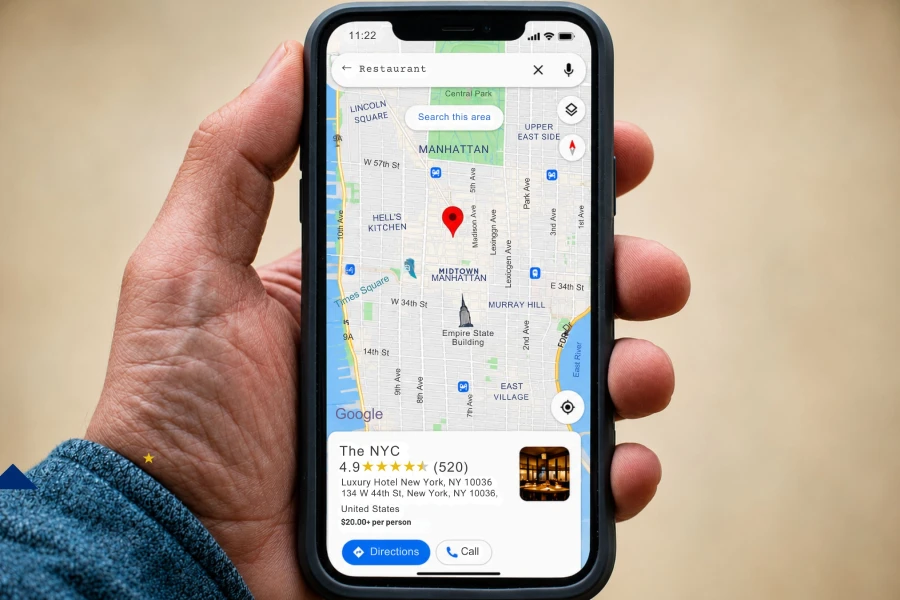
When a diner in SoHo opens Google Maps and types “Italian restaurant near me” on a Friday evening, they are not browsing. They are choosing. That search carries more purchase intent than almost any social media impression, any boosted post, or any paid ad served to a cold audience who was not looking for a restaurant at all. The problem for most NYC operators is not that diners are not searching for them. The problem is that a competitor three blocks away is showing up in the top three results, while they are not showing up at all. At My Chef Social, we work with NYC restaurant operators on a full growth strategy, and the pattern we see consistently is this: restaurants that invest in paid advertising before fixing their Google Business Profile for restaurants are paying to drive traffic to a listing that is incomplete, under-reviewed, or simply not ranking. The channel that fills tables first is not the most expensive one. It is the one that captures guests who are already searching. This post is the complete restaurant local SEO strategy that changes that equation.
The data behind this is not abstract. According to BrightLocal’s Local Consumer Review Survey, 88% of consumers who do a local restaurant search on their phone visit or call a business within 24 hours. A fully optimised Google Business Profile generates an average of 1,260 monthly views in mid-size markets, and significantly more in a dense metro like New York City. The Map Pack, which is the top three restaurant listings that appear above organic results in Google Search and on Google Maps, captures between 44% and 58% of all clicks for local restaurant queries (SearchScaleAI, 2026). If your restaurant is not in those three slots, the majority of diners who were actively looking for a place to eat never saw you.
What the Google Maps Map Pack Is and Why It Defines NYC Restaurant Discovery
The Map Pack is the set of three business listings that Google surfaces at the top of local search results when someone searches for a restaurant near their location. It appears above all standard website results. It shows your restaurant name, star rating, address, hours, a photo, and the distance from the searcher. On mobile, it also shows your Reserve button, your phone number, and a direct link to your menu. For most NYC restaurants, this single widget is the most valuable piece of digital real estate they have access to, and it costs nothing to appear in it beyond the time invested in optimising correctly.
Google determines Google Maps ranking for restaurants using three core factors: relevance, which is how well your profile matches what the person searched; distance, which is how close your restaurant is to the searcher; and prominence, which is how well-known and trusted your restaurant appears across the web. Proximity is largely fixed by your physical address. Relevance and prominence are entirely within your control, and they are where ranking is won or lost.
In New York City specifically, Google’s Vicinity update has made neighbourhood-level authority more important than broad city-level authority. Being listed as a “New York City restaurant” on Google is not enough. The algorithm rewards restaurants that clearly signal to Google they are the most relevant option on a specific block, in a specific neighbourhood, for a specific cuisine. A ramen shop in the East Village that signals neighbourhood authority for “ramen East Village NYC” consistently outranks a generically optimised listing trying to claim relevance for all of Manhattan.
The Five Levers That Drive Google Maps Restaurant Ranking
1. Google Business Profile Optimisation: Your Most Powerful Free Marketing Asset
Your Google Business Profile optimisation for restaurants is the single highest-leverage action in local search. According to the Whitespark 2026 Local Search Ranking Factors Report, your primary category selection is the most important signal in the entire Map Pack algorithm. Not reviews. Not links. Category. Choosing “Restaurant” as your primary category tells Google almost nothing. “Italian Restaurant,” “Ramen Restaurant,” or “Neapolitan Pizza Restaurant” tells Google exactly which searches to match you with. You can add up to nine secondary categories. A restaurant that is primarily Italian but also has a strong cocktail program and hosts private events should add “Cocktail Bar” and “Event Venue” as secondary categories. Each secondary category expands the range of searches you are eligible to appear for.
Beyond category, complete every field in the profile. Businesses with fully completed Google Business Profile fields generate 2.3 times more search visibility than incomplete listings (NEWMEDIA.COM, 2026). Upload your menu directly in text format rather than linking to a PDF. Google cannot read PDF menus. Your menu items become keyword-matching signals when uploaded as text directly inside the profile. Add photos consistently. Listings with 20 or more photos earn approximately 18% more clicks than profiles with fewer than five images. Upload new photos at least monthly because the algorithm treats consistent photo uploads as a freshness signal that the restaurant is being actively managed.
Use the Google Posts feature weekly. Each post should include a high-quality image, a hook in the first 100 characters since Google truncates the rest in the preview, and a clear call to action. Seasonal promotions, new menu items, event announcements, and neighbourhood-specific content all perform well. Weekly posts signal to Google that the profile is active, which feeds directly into the prominence ranking score. It is also worth noting that the technology you use to run your operation affects how efficiently you can maintain this cadence. Our guide on best restaurant technology tools for 2026 covers which POS and reservation platforms connect most smoothly to review automation and online presence management.
2. Review Velocity: The Ranking Signal Most Operators Get Wrong
Reviews account for approximately 16% of Local Map Pack ranking factors, and the most important dimension of that review performance is not your total review count. It is velocity, meaning how many new reviews are arriving each month (Spindl, 2026). According to Restaurant Velocity’s 2026 GBP analysis, a restaurant with 80 reviews and 10 new ones in the past month will consistently outrank a restaurant with 400 reviews and zero in the past quarter. For NYC restaurants competing in a top-ten metro market, 15 to 30 new reviews per month are needed to maintain a strong Map Pack position. That cadence is not achieved through passive hope. It requires a systematic Google Maps restaurant reviews strategy built deliberately into the guest experience.
The practical workflow is: a server verbal ask at the table paired with a receipt or table tent QR code that links directly to the Google review page, an SMS follow-up triggered two to four hours after the visit through your CRM system, and a response protocol that ensures every review receives an owner reply within 48 hours. Owner response rate is tracked by the algorithm as a behavioural engagement signal that contributes to the prominence score. Responding to every review is not optional. It is a ranking input.
There is one additional critical point. Reviews that mention specific dishes, occasions, or neighbourhood context carry more algorithmic weight in Google’s AI-powered local results than generic five-star reviews. A review that says “best birria tacos I have found in Bushwick, the slow-cooked beef is incredible” carries more local SEO value than “great food, highly recommend.” The language guests use in their reviews feeds directly into the keyword matching system. Encourage specificity by prompting guests with the question you want them to answer: “What did you love about your visit tonight?”
3. NAP Consistency: The Foundation That Holds Everything Together
NAP stands for Name, Address, and Phone number. Restaurant local citations are every online mention of these three pieces of information across the web. Yelp, TripAdvisor, Apple Maps, Bing Places, OpenTable, Facebook, Foursquare, and Zomato all hold a version of your business information, and Google cross-references all of them against each other and against your Google Business Profile.
When these sources match perfectly, Google’s confidence in surfacing your restaurant for local queries increases. When they conflict, even in minor ways like “Street” versus “St.” or a phone number formatted differently, that confidence score drops and your rankings suffer. According to Navoto’s 2026 Local Citation Guide, fixing NAP inconsistencies alone produces an average 16% ranking boost. For NYC restaurants that have changed address, phone number, or ownership in recent years, a full citation audit across the top 50 directories is one of the highest-return corrective actions available.
This is the infrastructure of restaurant search visibility that sits underneath everything else. A well-optimised GBP sitting on top of inconsistent citation data across 30 directories performs at a fraction of its potential. The citation layer is invisible to most operators until something goes wrong, but it is the reason why two restaurants with similar profiles can rank very differently in the same neighbourhood.
4. Geo-Targeted Content: Signalling Neighbourhood Authority Through Your Website
Geo-targeted restaurant marketing requires more than your address on a profile. Google’s current algorithm rewards restaurants that signal genuine neighbourhood relevance through their website content, not just through their map pin location.
Your restaurant website homepage should include your cuisine type and specific neighbourhood in the title tag and the H1 heading. “Modern Japanese Restaurant in the East Village, New York City” sends a different relevance signal to Google than “Modern Japanese Restaurant.” If your restaurant sits near a well-known landmark, reference it naturally in your website copy. “Two blocks from the High Line in Chelsea” or “on the corner of Bedford Avenue in Williamsburg” gives Google additional geographic anchors that reinforce your neighbourhood authority for relevant searches.
If you operate more than one location, each needs its own fully independent page with unique content specific to that neighbourhood. A generic shared Locations page weakens the local relevance of both listings. The connection between a strong restaurant local search in NYC and a properly built website is direct. Your website and your GBP work as a pair, each reinforcing the other’s signals. A well-designed, mobile-first restaurant website is the second pillar of the local search system. We cover exactly what that website needs to include in our guide on restaurant website design and online presence management for NYC venues.
5. The GBP Engagement Loop: Behavioural Signals That Compound Over Time
In 2026, Google increased the weight it places on user engagement signals in its local ranking calculation. Click-through rate on your listing, direction requests, phone call taps, menu link clicks, and reservation button presses all feed into the algorithm’s assessment of how active and relevant your restaurant is (Flento, 2026).
This creates a compounding effect. A well-optimised profile earns more clicks. More clicks generate stronger behavioural signals. Stronger signals push the profile higher in the Map Pack. A higher Map Pack position generates more clicks. The cycle reinforces itself over time, which is why restaurants that invest consistently in Google Business Profile restaurant optimisation widen the gap between themselves and competitors who treat the profile as a one-time setup task.
The practical implication for NYC operators is to treat the GBP as a living asset updated weekly: fresh photos, new posts, updated menu items, corrected holiday hours, and active Q and A management that seeds the questions guests actually ask. Profiles that show no activity for 30 or more days show measurable drops in impressions, according to AgencyJet’s 2026 GBP analysis. Fifteen minutes of weekly maintenance on a well-structured profile consistently produces more guest discovery than a $500 boosted post on a platform where the audience was not looking for a restaurant.
How Google Maps, Social Content, and Paid Ads Work as One System
Google Maps marketing for restaurants is not an alternative to paid advertising or social content. It is the foundation that makes every other channel perform better. Understanding this sequence is what separates operators who get compounding returns from their marketing from those who keep paying for results that do not stick. The full guest acquisition cycle for a well-optimised NYC restaurant works like this: a diner discovers the restaurant through organic social content, a post on Instagram or a Reel on TikTok. They search for the restaurant name on Google. They land on a strong Google Business Profile with recent reviews, updated photos, and an active menu. They click the reservation button and book. Every step in that cycle depends on the Google layer working correctly. The social content creates the initial awareness. The Google profile converts that awareness into an action.
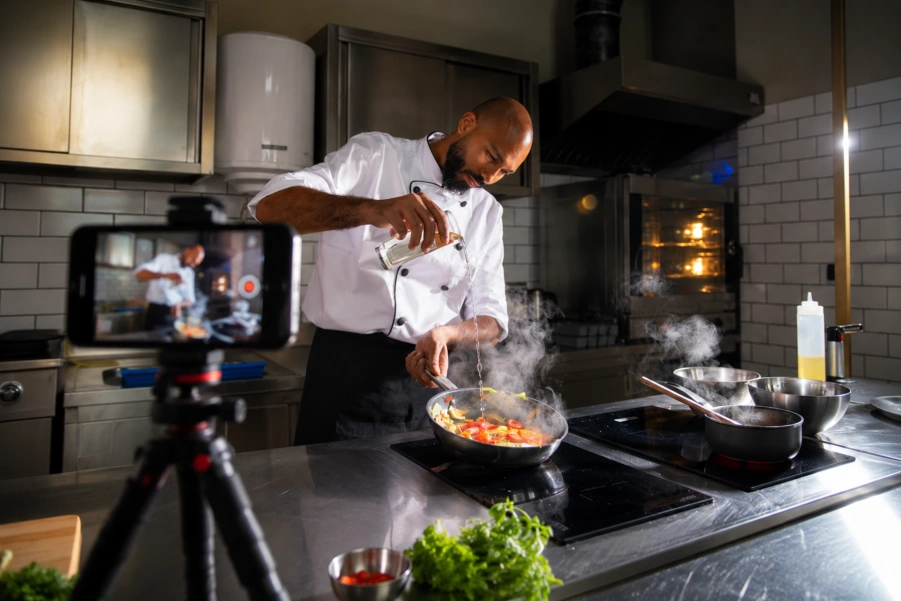
For operators who want to build the social content side of this system, our guide on behind-the-scenes restaurant content that drives reservations for NYC restaurants in 2026 covers exactly what kind of content generates the branded searches that feed back into Google Maps prominence scores. Branded searches, which are Google queries that use your restaurant name directly, are one of the strongest prominence signals the algorithm recognises. The same logic applies to your restaurant’s broader brand positioning. A restaurant with a clearly defined identity, consistent visual language, and a well-articulated value proposition earns more specific, high-quality reviews and generates stronger word-of-mouth that creates branded search volume. Our analysis of restaurant pricing strategy and value positioning covers how brand clarity protects both your price integrity and your review sentiment, two signals that work directly inside the local search ranking system. It is also worth connecting Google Maps visibility to the financial picture. The operators who maintain the strongest Map Pack positions are typically the ones with the financial discipline to invest consistently in their digital presence over time, rather than cutting marketing spend the moment margins tighten. Our guide on protecting restaurant profit margins in 2026 is a useful companion read for any operator thinking about where digital marketing fits inside the overall cost structure.
Ready to move your restaurant into the Map Pack?
The restaurant marketing agency NYC team at My Chef Social builds a complete local search system that puts NYC restaurants in front of guests who are already searching and ready to book.
A Final Word: The Cheapest Guest You Will Ever Acquire Is the One Who Found You on Maps
New York City opens a new restaurant approximately every 72 hours. Every one of those restaurants has access to paid advertising from day one. Not every one of them invests in the Google Maps ranking for restaurants foundation that produces guests at zero cost per click, compounds in value every month, and works while the kitchen is closed. The operators who hold strong Map Pack positions in competitive NYC neighbourhoods like the West Village, Williamsburg, Astoria, and Midtown are not there by accident. They built their Google Business Profile for restaurants deliberately, maintained their review velocity systematically, kept their citation data clean across directories, and treated their GBP as a living asset that requires weekly attention rather than a listing created once and forgotten.
Google Maps visibility does not require an ad budget. It requires consistency, accuracy, and operational discipline to maintain a profile that earns the algorithm’s trust week after week. For most independent NYC restaurants, the Map Pack is the highest-return, lowest-cost guest acquisition channel available. The restaurants winning it are the ones who decided to take it seriously first, before their competitors did. For operators who want to build the full digital ecosystem that connects local search, social presence, paid advertising, and guest retention into one coordinated system, our restaurant social media marketing NYC and restaurant branding and creative direction services are built to work together with the local search foundation this post covers.
At My Chef Social, we help NYC restaurant operators build the digital growth infrastructure that turns consistent local visibility into consistent reservations.
Book your free growth audit today
Frequently Asked Questions
Is TikTok actually effective for restaurant marketing in NYC?
TikTok is the most effective organic guest acquisition channel available to NYC restaurant operators in 2026 for new guest discovery, particularly among the 18–35 demographic that represents the highest-frequency dining segment in the market. Its algorithmic structure allows independent restaurants with minimal followers to reach tens of thousands of highly relevant potential guests through well-executed content, a reach dynamic that no other organic channel, including Instagram, currently replicates. The operators dismissing it as a trend channel are consistently being outperformed in new guest acquisition by those who are not.
What kind of TikTok content works best for restaurants?
The three content categories that consistently over-index in the restaurant category are behind-the-scenes process footage (prep kitchen, butchery, pasta rolling, pastry work), personality-led content featuring the chef or a recognizable front-of-house voice, and trend participation content that adapts active TikTok formats to the restaurant's identity. Of these, behind-the-scenes content has the most durable algorithmic performance because it delivers genuine utility, showing viewers something they cannot see anywhere else, which drives high completion rates and shares.
How is TikTok different from Instagram for restaurant marketing?
TikTok is a discovery platform; Instagram is a network platform. TikTok's algorithm surfaces content to non-followers based on engagement signals, meaning a restaurant with 300 followers can reach 300,000 people through a single well-performing video. Instagram's algorithm primarily serves existing followers, making organic reach to new audiences increasingly limited. In strategic terms, TikTok is the top-of-funnel discovery channel, and Instagram is the consideration and validation layer. They serve different functions and should not be used interchangeably.
How often should a restaurant post on TikTok?
Consistency outperforms volume. Three to four posts per week of genuine, native content will outperform seven posts per week of content that feels produced for a different platform. The algorithm rewards watch time and completion rate above all else, which means one video that holds viewer attention through to the end is worth more than five videos that lose their audience in the first three seconds. Build a sustainable production cadence that the team can maintain for 12 months, not a sprint that burns out in six weeks.
Should a restaurant's chef be on TikTok personally, or just the restaurant account?
Both, ideally with a coordinated strategy. A chef's personal TikTok presence builds parasocial loyalty that converts directly into reservation demand, and the chef's voice carries an authenticity that a brand account cannot fully replicate. The restaurant account anchors the concept's identity and serves as the destination for guests who arrive via the chef's content. When both accounts are active and cross-referencing each other, the compounding reach effect is significantly greater than either account achieves independently. For operators working with a restaurant, an Instagram marketing NYC, or a TikTok specialist, this dual-account architecture should be part of the initial content brief.