The Gap Between Your Plate and Your Feed
Every restaurant in Manhattan invests significantly in what happens inside the kitchen. Sourcing, technique, plating, timing, the standards are exacting. But the moment that dish leaves the pass and enters the digital world, most restaurants hand the responsibility to whoever happens to be holding a phone.
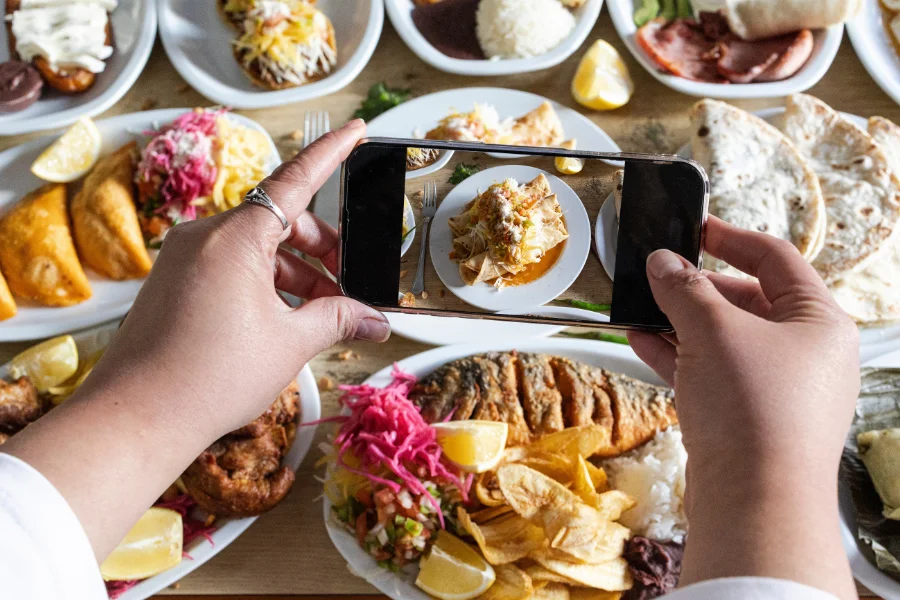
The result is a feed full of content that undersells the experience. Flat lighting. No motion. No story. No reason for a potential guest to stop scrolling. This matters more in 2026 than it ever has. Restaurant social media is no longer a supplement to word-of-mouth. For a significant number of guests, especially first-time visitors, it is the first and only impression they get before deciding where to eat, and social media visuals that restaurants post are being judged against professional content from every other hospitality brand competing for the same audience.
“The question is not whether your food photographs well. It is whether your content stops someone mid-scroll and makes them want to be in your dining room tonight.”
Why a 2-Second Video Outperforms a Perfect Photo
Static images still have a role. But the shift toward short-form video across every major platform is not a trend. It is an infrastructure change. Instagram’s algorithm prioritizes Reels. TikTok is entirely video-native. Even Google now surfaces video content in local search results. For restaurants, this shift creates a specific advantage:
Content Type | What It Communicates |
Static photo | How the dish looks |
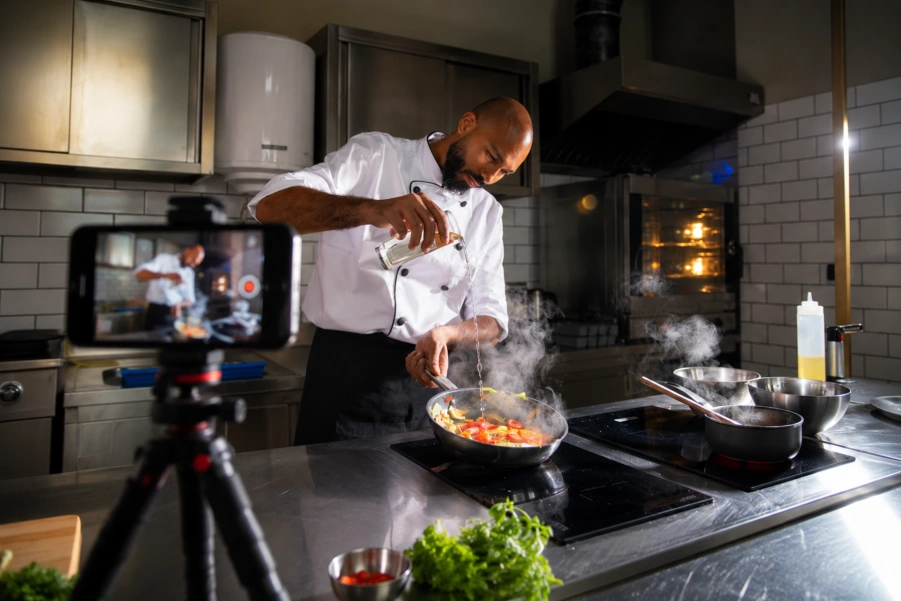
Short-form video for chefs | How the dish moves, sounds, steams, breaks, pours—the full sensory promise |
Cinematic food videos | The emotion of the experience—the kitchen, the hands, the room, the moment the plate lands |
The difference is not just aesthetic. It is strategic. A cinematic food video gives a potential guest a reason to feel something before they have ever stepped inside. A photo gives them information. A video gives them desire.
The 3-Second Hook: What Makes Restaurant Video Content Convert
Not all videos perform equally. The difference between a reel that gets 500 views and one that drives actual reservations comes down to structure, not budget.
What the first 3 seconds must do:
- Interrupt the scroll: Motion, contrast, or an unexpected visual that breaks the pattern of whatever the viewer was just watching
- Establish quality instantly: The production value in those opening frames signals whether this is a restaurant worth paying attention to
- Promise something specific: A technique, a reveal, a transformation, not just a plate sitting on a table
What the remaining 10–20 seconds must do:
- Deliver on the hook: If you promised a reveal, deliver it
- Show the environment: The guest is not just buying a dish. They are buying the room, the energy, the service
- End with intent: A reservation link, a location tag, a clear next step
This is where Instagram food content strategy separates from random posting. Every piece of video content should be built with a purpose: discovery, desire, or conversion (ideally all three in sequence).
At My Chef Social, this framework is what we build for every restaurant client. Content that is designed to perform, not just to exist on a feed.
Building a Content System, Not a Content Calendar
The restaurants producing the most effective video content in New York right now are not posting more. They are producing smarter. A single well-planned shoot can generate weeks of content across multiple platforms.
A structured content shoot looks like this:
- One hero video (60–90 seconds), the cinematic piece built around a signature dish, a seasonal launch, or the chef’s story
- 4–6 short-form cuts (10–20 seconds each), extracted from the hero footage, each optimized for a different platform or hook
- 8–10 still frames, pulled from the video shoot, maintaining visual consistency across the feed
- 2–3 story-format pieces, behind-the-scenes, process shots, kitchen moments that feel immediate and authentic
This approach turns restaurant content marketing from a daily scramble into a strategic asset. It also ensures visual consistency, which is what builds recognition over time. When a potential guest sees your content three or four times, and every piece looks like it belongs to the same brand, trust builds before they have ever visited. Restaurant content creation in NYC at the highest level operates on this model. Not more content. Better systems.
The Influencer Layer: Amplification, Not Replacement
Professional content and influencer partnerships are not competing strategies. They are sequential. Your own food cinematography establishes the brand standard. It tells the audience what your restaurant looks and feels like on your terms. NYC food influencer marketing then amplifies that standard to new audiences. The mistake most restaurants make is inverting this order. They invest in influencer content before establishing their own visual identity. The result is a brand that looks different in every tagged post and owns none of its own narrative.
The right sequence:
- Build your own cinematic content library, your visual identity, your terms
- Use that content to set the standard on restaurant Instagram marketing on NYC platforms
- Then partner with creators whose audience and aesthetic align with what you have already established
- Provide those creators with a clear brief rooted in your brand, not their usual format
When the influencer’s content looks like it belongs on your feed, the partnership works. When it does not, you have paid for someone else’s content, using your restaurant as a backdrop.
The Manhattan Factor: Why This Matters More Here
New York is arguably the most competitive restaurant market in the world. Every neighborhood has density. Every cuisine has representation. Every price point has options. In this environment, restaurant video marketing is not a creative nice-to-have. It is a discovery mechanism. A guest searching for dinner in the West Village tonight will encounter dozens of options. The one that stopped their scroll with a cinematic food video showing a hand-pulled mozzarella stretching in slow motion has an advantage that no amount of paid advertising can replicate.
That same principle is why this approach resonates far beyond the five boroughs. A restaurant in Milan’s Brera district, a bistro in London’s Soho, and a new opening in Dubai Marina, the visual language of cinematic food content translates across markets. The guest in another country who watches your reel and saves it for their next New York trip is a future reservation you earned through content, not spent.
This Is a Solvable Problem
If your current content does not reflect the quality of what your kitchen produces, the gap is not talent. It is structured. The right restaurant video marketing system, built once and executed consistently, changes how your brand is perceived online within weeks, not months.
My Chef Social works with Manhattan restaurants to build cinematic content systems that turn signature dishes into the most powerful marketing assets in the operation. From restaurant content creation in NYC to full restaurant social media strategy, the goal is the same: make the screen match the plate.
If your food deserves better than a phone photo, it probably deserves a conversation.
Let’s build your content system →
FAQs
Does cinematic food content require a large production budget?
Not necessarily. A single structured shoot with the right creative direction produces weeks of content across platforms. The investment is in planning and expertise, not equipment excess.
How often should a restaurant post video content?
Consistency matters more than frequency. Three to four high-quality short-form videos per week outperform daily low-effort posts in both reach and conversion.
Can existing dishes be used, or does this only work for new menu launches?
Existing signature dishes are often the best starting point. They already have a reputation. Cinematic content gives them a new digital life and extends their reach to guests who have not yet visited.
What platforms should restaurants prioritize for video content?
Instagram Reels and TikTok for discovery. Google Business Profile for local search visibility. Your own website for conversion. Each platform serves a different stage of the guest journey.
How does this connect to influencer marketing?
Professional brand content establishes your visual identity first. Influencer partnerships then amplify it to new audiences. The two work in sequence, not in isolation.