Most restaurants that struggle with TikTok and Reels don’t have a creativity problem. They have a scheduling problem. Someone on staff means to film something, gets pulled onto the line during service, and three weeks go by without a single new post. The account goes quiet, the algorithm notices, and the whole channel starts feeling like an afterthought nobody has time for. The fix isn’t finding more time every single day. It’s compressing a month of content into one focused afternoon.
Thirty videos sounds like a lot until you actually break down what a well-run kitchen produces in two hours on any given day. Plating happens dozens of times. Prep repeats in nearly identical motions. None of that raw material disappears once service ends, it just never gets pointed at a camera on purpose. Batching doesn’t create more content out of nothing. It just finally captures what was already happening anyway.
Stop Filming in the Moment, Start Filming in Batches
Here’s the thing about restaurant content. The kitchen looks basically the same on a Tuesday as it does on a Thursday. The plating techniques don’t change week to week. The prep work repeats. Which means you don’t actually need to film constantly to have constant content. You need one well-planned session that captures enough raw footage to edit and release for weeks afterward.
This is the entire logic behind batch production, and it’s a completely different mindset than the reactive, grab-a-phone-during-service approach most restaurants default to. One shoot. Dozens of clips. A month of posting scheduled out from footage that already exists, instead of scrambling every few days to film something new.
Building the Shot List Before You Ever Pick Up a Camera
A two-hour shoot that produces thirty usable clips doesn’t happen by wandering around filming whatever looks interesting. It happens because someone built a shot list in advance, mapping out exactly what needs to get captured before the camera turns on. Plating shots for your three or four signature dishes. Prep footage, knife work, a sauce coming together, dough getting shaped. A few staff moments, someone laughing, a chef tasting something, small human beats that make the account feel alive instead of purely transactional. And b-roll, steam rising off a pan, a close-up pour, the kind of texture-heavy footage that fills gaps in almost any edit later.
Without that list, a two-hour shoot turns into forty-five minutes of usable footage and an hour and fifteen minutes of standing around trying to think of what to film next.
One Dish, Many Angles, Way More Footage Than You’d Expect
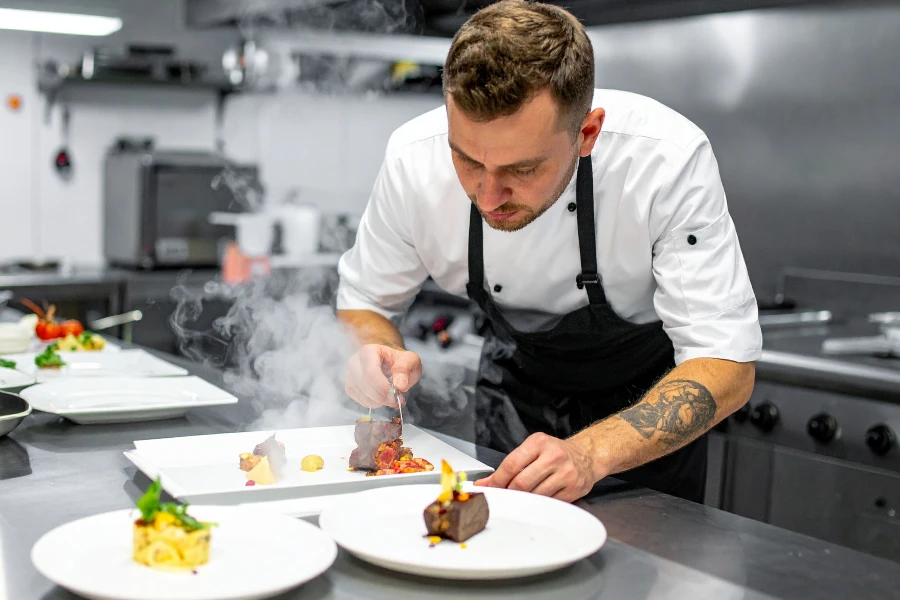
A single plated dish can realistically generate five or six distinct clips if you’re shooting it properly. A slow overhead pan. A close-up on the garnish going on. A fork cutting through. Steam rising if it’s hot. A wide shot of it landing on the table. Multiply that across just four hero dishes and you’re already sitting on twenty clips before you’ve touched prep footage, staff moments, or b-roll at all.
This is the same principle behind our approach to cinematic signature dish video, just applied at volume instead of to a single hero piece. Pick your strongest dishes, shoot each one from multiple angles in the same session, and you’ll walk away with far more usable footage than trying to capture something new and different every single day.
Behind-the-Scenes Footage Fills the Gaps Perfectly
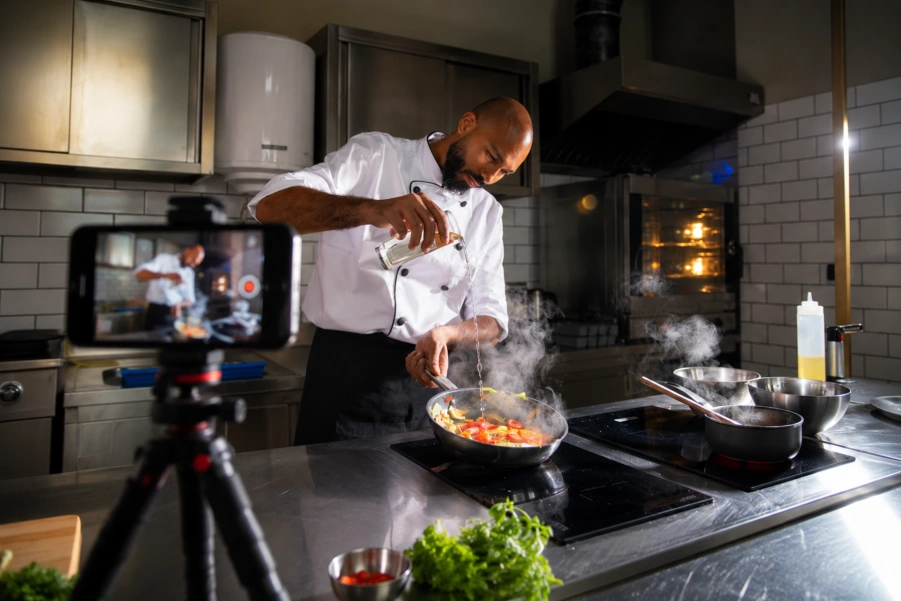
Not every clip needs to be a polished, hero-lit food shot. Some of the best-performing restaurant content is the unglamorous stuff, a line cook working fast during prep, someone plating fifteen dishes in a row, the chaos of a busy pass captured just right. That kind of footage is exactly what’s covered in our piece on behind-the-scenes reel ideas, and it happens to be some of the easiest content to capture in bulk, since it’s just your normal prep work happening in front of a camera instead of around it.
Building ten minutes into your batch shoot specifically for this kind of footage, no extra staging required, fills a huge chunk of your monthly calendar without asking anyone to perform for the camera.
Editing in Batches Too, Not One Video at a Time
The shoot is only half the workflow. Editing thirty separate videos one at a time, on thirty separate days, defeats the entire purpose of batching in the first place. A better approach sets aside a dedicated editing block right after the shoot, working through the raw footage in one sitting and producing a stack of finished clips ready to schedule, rather than editing reactively every time you need something to post.
This connects directly to the format and posting rhythm we cover in our restaurant TikTok marketing guide. The platform rewards consistency more than any single piece of content being perfect, and a batch of pre-edited videos scheduled out in advance guarantees that consistency in a way day-to-day filming almost never manages to.
Fold the Shoot Into Your Actual Marketing Calendar
A monthly shoot only works if it’s actually scheduled like a real commitment, not something that happens whenever there’s a slow afternoon. Building it into your restaurant marketing calendar as a recurring monthly block, same day, same time, same shot list template adjusted for whatever’s seasonal, turns content production from a constant source of stress into a predictable, manageable routine.
Some of This Footage Deserves Paid Distribution Too
Not every clip from a batch shoot needs to stay purely organic. The strongest two or three pieces from a given month, the ones with the cleanest shots and the most compelling hook, are often worth running as paid placements too. The campaign structure built for NYC restaurant ads works just as well with batch-shot content as it does with a dedicated one-off video, and it means a single afternoon of filming can end up fueling both your organic feed and a paid push in the same month.
One Afternoon, A Month of Content
Restaurants that post consistently on TikTok and Reels usually aren’t filming every day. They just figured out how to compress a month’s worth of content into one well-planned session, then spread it out through a schedule that does the daily work for them. A shot list, a couple of hours in the kitchen, and a dedicated editing block turns a chronic content gap into a calendar that basically runs itself. The kitchen doesn’t need to perform for a camera every day. It just needs someone to point one at what’s already happening, once a month, on purpose.
My Chef Social helps NYC restaurants build exactly this kind of batch content system, from shot list planning to monthly editing workflows. Reach out to our team if you’re ready to stop scrambling for content and start filming a month at a time.
Book your free growth audit today
FAQs
How many videos can realistically come from one restaurant video shoot?
A well-planned two-hour session built around a shot list can produce enough raw footage for around thirty short-form videos.
What should be on a restaurant's video shot list?
Multiple angles of a few signature dishes, prep and behind-the-scenes footage, small staff moments, and texture-heavy b-roll like steam or close-up pours.
Should editing happen the same day as filming?
Editing works best in one dedicated block right after the shoot, producing a batch of finished clips rather than editing reactively one video at a time.
How often should a restaurant run a batch content shoot?
Monthly, scheduled as a recurring commitment on the marketing calendar rather than something squeezed in during a slow afternoon.
Can batch-shot content be used for paid ads too?
Yes. The strongest clips from a shoot are often worth running as paid placements alongside the organic posting schedule.