
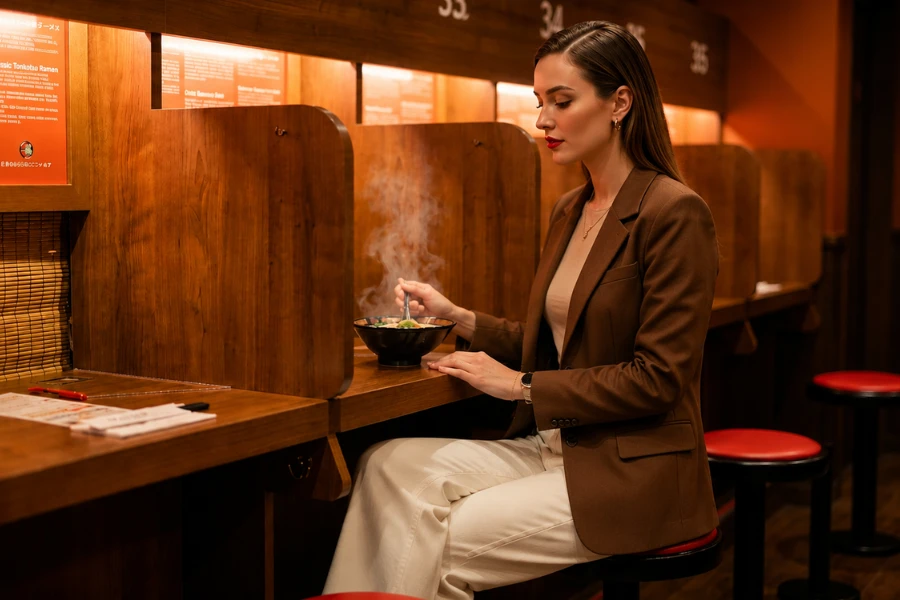
The Quiet Rise of Manhattan’s Highest-Spending Guest
The solo diner is no longer the exception. In Manhattan, they are often the most profitable seats in the room. The reasons are structural. Remote work has changed how people spend their evenings. Dating culture has created more independent social rhythms. And a younger generation does not associate eating alone with loneliness; they associate it with control over their own time, their own pace, and their own money.
The result is a guest who walks in with intent, orders the full menu, and leaves a clean ticket without needing a reason or a companion. This is one of the most underestimated solo dining trends in the city right now, because most operators are still measuring success by table turn and party size instead of per-cover spend and frequency. This shift also changes customer decision-making, since the guest is choosing based on confidence, comfort, and a frictionless experience, not group consensus.
Why Solo Diners Are Worth More Than You Think
A solo diner is not a smaller two-top. They are a different economic unit, and the math usually surprises operators when they actually look at it. Here is what the average solo diner brings to the table:
- Higher per-cover spend. They are not splitting an entrée or skipping dessert to be polite.
- Higher frequency. Solo diners return more often because the decision to come back is theirs alone.
- Higher loyalty. A great solo experience builds a regular, not just a customer.
- Lower service load. One guest, one ticket, one conversation, and faster turns when needed.
- Higher social proof. Solo diners post, review, and recommend at higher rates than couples.
The operators winning this category have realized that customer experience design restaurant decisions made for solo diners often improve the experience for everyone else, too.
What Solo Diners Actually Want (And What Most Restaurants Get Wrong)
Solo dining is not about being left alone. It is about being treated like a guest who chose to be there, not one who needs to be managed. The gap between what solo diners actually want and what most Manhattan restaurants deliver is wider than operators think.
What Solo Diners Want | What Restaurants Get Wrong |
A real seat with good lighting and clear sightlines | Tucking them into awkward corners or dim bar ends |
Sharper, more attentive service | Under-serving them, assuming they want less attention |
Permission to linger through a second drink or dessert | Dropping the check the moment the entrée is cleared |
Access to the full menu, including tasting formats | Steering them toward “quicker” or smaller options |
To feel chosen, not accommodated | Treating the solo seat as overflow, not a product |
Counter space to actually eat comfortably | Cramped bar setups built for drinks, not meals |
The fix is not a new menu. It is a new restaurant seating strategy that treats the solo seat as intentional, not improvised. The operators winning this segment are not adding solo-friendly features as an afterthought; they are building the bar, the counter, and the service flow around the solo diner from day one.
The Anatomy of a Solo-Friendly Restaurant
The best solo-friendly restaurants in Manhattan share a clear design pattern. It is not about adding a “solo section.” It is about embedding solo dining into the layout, service flow, and brand experience.
Design Element | What Most Restaurants Do | What Solo-Friendly Restaurants Do |
Bar Seating | Treated as a waiting area | Treated as a primary dining experience |
Sightlines | Solo diners face a wall or a station | Solo diners face the kitchen, the bar action, or the room |
Lighting | Dimmed uniformly | Layered so solo seats feel intentional, not isolated |
Menu Access | Standard table menu | Same full menu, often with solo-friendly portion options |
Service Pace | Faster turn assumed | Pace led by the guest, not the floor |
Tech Integration | Limited | QR menus, easy reordering, frictionless payment |
Disclaimer: This table reflects directional patterns observed across Manhattan hospitality operations and industry commentary. It is not drawn from a single published study.
This is what real bar seating optimization looks like when it is built around the guest instead of inherited from old floor plans.
The Bar Is the New Dining Room
The most important shift in Manhattan dining rooms right now is not on the menu; it is on the floor plan, and it is quietly rewriting every smart operator’s restaurant seating strategy. The bar has stopped being a holding area for guests waiting on a table and has become the most valuable seat in the room, especially for the solo diner who wants control over their own experience without being managed by a host stand. That single shift is reshaping how the best restaurants in the city approach bar seating optimization, because the bar now offers what a two-top often cannot: a clear view of the action, a natural service rhythm, an easy opening for conversation, and a graceful exit when the guest is ready to leave.
For operators, the math behind this shift is just as strong as the experience behind it. A well-designed bar delivers faster turns, higher beverage attach, and a live stage where the brand performs in real time in front of every guest who walks in, which is why thoughtful customer experience design restaurant teams are now treating the bar as a primary product instead of overflow seating. The restaurants leading this shift in Manhattan are not just adding more tables; they are rebuilding the bar with proper plating, full-menu access, intentional lighting, and service standards that match the dining room, turning the counter into the most profitable square footage in the entire space.
Solo Dining Is a Brand Move, Not a Seating Decision
How a restaurant treats the solo diner is not an ops choice; it is a brand statement. It tells the market exactly how confident the operator is and how well they actually read the city. Designing for the solo guest signals three things at once:
- Confidently, the restaurant does not flinch at “just one.”
- Respectfully, the guest sets their own pace, and a party of one is treated as a party.
- Culturally fluent solo diners are Manhattan’s loudest reviewers and most consistent content creators.
Those are signal compounds, which is where restaurant marketing and branding in NYC starts pulling weight. A clear brand message brings the right guests in without paid acquisition, lifts per-cover spend, and turns the bar from overflow seating into the highest-converting seat in the room.
At My Chef Social, we have watched this shift play out across Manhattan operators. The pattern is consistent. The moment a restaurant stops treating the solo diner as overflow and starts treating them as a category, the numbers move, regulars build faster, and the brand starts attracting the kind of guest no loyalty program could buy.
The Operator’s Playbook: Designing for the Solo Diner
For Manhattan operators who want to capture this segment without overhauling the restaurant, the path is straightforward.
- Audit the bar. Is it built for drinks or for dining? It should be built for both.
- Audit the sightlines. Where do solo diners actually look? Make that view worth it.
- Audit the service script. Replace “just one?” with “great, follow me.”
- Audit the menu. Make sure the full experience is accessible without ordering for two.
- Audit the brand voice. Does your website, Instagram, and reservation flow signal that solo diners are welcome, or do they assume every guest is part of a pair?
These are small shifts. The revenue impact is not small, especially when they are connected to a measurable guest retention strategy that turns a high-frequency solo guest into a predictable weekly regular.
Build the Restaurant the City Is Already Looking For
The single diner experience is no longer a side conversation in Manhattan hospitality. It is one of the clearest signals of whether a restaurant actually understands its city or is still running a 2015 playbook on a 2026 floor. If your restaurant is ready to stop losing the highest-spending guest in the room, My Chef Social helps Manhattan operators redesign the seating strategy, service flow, and brand experience that turn solo diners into regulars. As a marketing agency for bars and restaurants NYC operators trust, we build the systems that turn quiet shifts in customer behavior into measurable revenue, and help you maximize restaurant revenue without adding square footage or chasing discount traffic.
Let’s redesign your restaurant for the guests the city actually sends you →
Frequently Asked Questions
Why are solo diners considered high-value guests in NYC?
Because they typically spend more per cover, return more often, and post about their experience more than group diners. The solo dining NYC trend has made them one of the most profitable segments in Manhattan hospitality.
Do I need to redesign my restaurant to attract solo diners?
No full redesign needed. Most operators only need a sharper restaurant seating strategy, better bar sightlines, and a service script that treats solo diners as intentional guests instead of overflow.
Is the bar really the best place to seat solo diners?
For most Manhattan restaurants, yes. The bar offers control, sightlines, pace, and a natural sense of belonging. Proper bar seating optimization turns it into a primary dining experience, not a waiting area.
How does solo dining connect to branding?
How a restaurant treats solo diners signals its values and its understanding of modern NYC. It directly shapes customer experience decisions and influences how the brand is perceived across reviews, social media, and word of mouth.
What is the fastest way to start designing for solo diners?
Audit the bar, the sightlines, the menu, and the service script. Small changes in these four areas usually produce the biggest shift in per-cover spend and guest loyalty.