
The Packed Dining Room That Is Quietly Bleeding Money
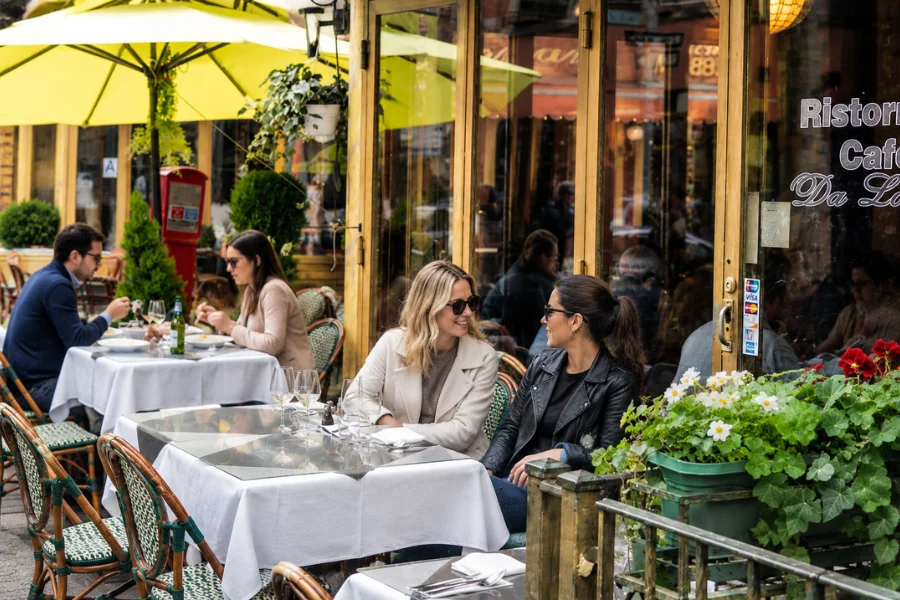
There is a reason brunch feels like a win every single Sunday. The energy is high. The dining room is full. The reservation book is stacked. For any restaurant operator in Manhattan, that visual confirmation of success is powerful, but here is what that visual does not show you:
- Your labor cost just spiked. Brunch requires the same kitchen staffing as dinner service, sometimes more, when you factor in prep for egg stations, pastries, and juice programs, but at a significantly lower average check.
- Your ticket average dropped. A dinner guest spending $78 per person is now a brunch guest spending $34 per person, ordering one entrée, one cocktail, and splitting one side.
- Your table turn slowed down. Brunch guests linger. The two-top that turns three times during a weeknight dinner service is now occupied for 90 minutes by a group that ordered two mimosas and an avocado toast.
This is the core of the Sunday brunch illusion. The restaurant margin analysis does not lie, even when the dining room tells you everything is fine. And when you run a real restaurant margin analysis, it becomes obvious why the brunch profitability that restaurants expect is often overstated.
“The question is not whether brunch is busy. The question is whether brunch is profitable enough to justify the operational cost it demands.”
Where the Margin Actually Disappears: A Breakdown
Most restaurant operators have a general sense that brunch margins are tighter. But few have quantified exactly where the gap lives. Here is a side-by-side comparison that illustrates the problem:
|
Metric |
Sunday Brunch |
Friday Dinner |
|
Average covers per service |
180 |
140 |
|
Average spend per guest |
$36 |
$74 |
|
Gross revenue per service |
$6,480 |
$10,360 |
|
Labor cost (% of revenue) |
38–42% |
28–32% |
|
Food cost (% of revenue) |
32–36% |
28–31% |
|
Average table turn time |
75–90 min |
55–65 min |
|
Beverage margin contribution |
Low (juice, coffee, single cocktail) |
High (wine pairings, cocktail rounds, digestifs) |
|
Net margin per service |
8–14% |
22–28% |
Look at the covers column. Brunch wins. Look at the net margin row. Dinner wins by a significant distance. That is why brunch profitability restaurants chase with high covers can still underperform.
The Five Silent Margin Killers in Your Brunch Service
If your brunch is running but not contributing meaningfully to your bottom line, the problem usually lives in one or more of these five areas:
1. The Bottomless Model Is Destroying Your Beverage Margin
Bottomless brunch became a competitive necessity in New York. But what started as a differentiation tool has become a margin destroyer. When a guest pays $25 for unlimited mimosas, your per-drink revenue drops to $3–$4 per glass after the third round. Meanwhile, the cost of sparkling wine, juice, and glassware labor stays fixed.
What to consider instead:
- Tiered cocktail flights with a fixed number of drinks at a premium price point
- A curated brunch cocktail menu with high-margin signature drinks priced individually
- A “bottomless window” (60 minutes instead of the full service) to control consumption while maintaining the perception of value
2. Your Kitchen Is Running Dinner-Level Labor on Brunch-Level Revenue
Brunch menus that require separate prep, hollandaise, fresh pastry, and custom egg stations demand skilled labor. That labor costs the same on Sunday morning as it does on Friday night. But the revenue it generates is 35 to 50% lower.
What to consider instead:
- Streamline the brunch menu to 10-12 items that share prep overlap with your weekday lunch or dinner mise en place
- Eliminate items that require a dedicated station operator unless that item drives proven upselling behavior
- Cross-train existing staff rather than scheduling additional bodies
3. Your Table Turn Rate Is Being Held Hostage by the Brunch Culture
Brunch is social. Guests arrive in groups, linger over coffee, take photos, and treat the table like a living room. There is nothing wrong with that, unless your restaurant needs that table back to seat the next party.
What to consider instead:
- Implement 90-minute reservation windows with a polite but clear confirmation at booking
- Design the post-meal experience to naturally conclude by presenting the check proactively and offering coffee to-go as a branded gesture
- Use waitlist management technology to keep the next party ready, reducing dead time between turns
4. Your Brunch Menu Is Priced on Emotion, Not Math
Many restaurants price brunch items based on what “feels right” or what competitors charge rather than on actual food cost, labor allocation, and margin contribution. A $19 eggs Benedict might feel fair to the guest, but when you calculate the cost of protein, hollandaise prep, English muffin sourcing, and plating labor, the margin on that dish might be under 12%. This is exactly where a disciplined brunch pricing strategy matters.
What to consider instead:
- Run a menu engineering brunch analysis, categorize every item by profitability and popularity
- Identify your Stars (high profit, high popularity), Puzzles (high profit, low popularity), Plowhorses (low profit, high popularity), and Dogs (low profit, low popularity)
- Redesign your menu layout to visually guide guests toward Stars and Puzzles
This is the trap. High-volume, low-profit restaurants across Manhattan fall into this pattern every single week. The dining room tells them success. The spreadsheet tells them something else entirely.
5. You Are Not Capturing Brunch Guest Data for Retention
Brunch attracts a disproportionately high percentage of first-time and infrequent diners—tourists who found you on Google Maps, groups celebrating birthdays, and couples exploring a new neighborhood. Your dining room is full of guests who may never return, not because the experience was poor, but because you gave them no reason or mechanism to come back. Without a data capture system in place, every packed Sunday service is a one-time transaction disguised as a busy day.
What to consider instead:
- Implement a reservation system that captures guest email and phone number at the point of booking, not after the meal
- Use a post-brunch automated follow-up, a thank-you message sent within 24 hours, with a weekday dining incentive to convert the one-time visitor into a repeat guest
- Build a segmented guest list specifically for brunch-origin diners and run targeted re-engagement campaigns through SMS or email within 10 days of their first visit
These guests walked through your door already impressed enough to choose you. They sat down, ordered, enjoyed, paid, tipped, and left. And for the vast majority of them, that is where the relationship ended, not because they did not like you, but because you gave them no reason or mechanism to come back.
What most restaurants fail to collect during brunch service
|
Data Point |
Why It Matters |
How to Capture It |
|
Email address |
Enables post-visit follow-up, event invites, and seasonal promotions |
Digital reservation confirmation, Wi-Fi login gate, QR-based feedback form |
|
Phone number |
Opens SMS marketing channel, with the highest open rates in hospitality |
Waitlist sign-up via host stand tablet, loyalty program enrollment |
|
Dining occasion |
Allows personalized re-engagement based on life events |
Brief server-initiated conversation, reservation notes field |
|
Party size and composition |
Helps predict group dining behavior and table allocation trends |
POS tagging, reservation platform data |
|
First visit vs. return visit |
Segments your audience for targeted campaigns |
CRM tagging at the point of reservation or checkout |
If your Sunday brunch serves 150 covers and 60% of those are first-time guests, that is 90 people every single week who could become regulars, refer friends, book private events, or follow you on social media. Over a month, that is 360 potential repeat guests walking out the door with zero follow-up. Over a quarter, that is over 1,000 guests you served excellently and then completely lost contact with.
Restaurants that integrate even a basic CRM workflow into their brunch service, like a post-visit email within 24 hours, a birthday month offer, or a “we saved your favorite table.” SMS sees measurably higher return rates from brunch-origin guests compared to those relying purely on organic return visits.
“The busiest service of your week is also the one generating the most untapped retention data. The question is whether you are collecting it or letting it walk out with the check.”
The Fix Is Not Fewer Brunches: It Is a Smarter Brunch
If you have read this far, you might be wondering whether the answer is to cut brunch entirely. It is not. Sunday brunch is not the problem. Unexamined brunch is the problem. The restaurants in Manhattan, Brooklyn, and across New York that are genuinely profiting from brunch are not doing anything radical. They are simply treating brunch with the same financial and operational rigor they apply to their Friday dinner service. Here is what a strategically optimized brunch operation looks like:
Menu Engineering
- A focused menu of 12 to 15 items maximum, built around high-margin ingredients
- Elimination of dishes that require excessive prep labor but generate an average ticket contribution
- Strategic placement of high-margin items in the top-right quadrant of the physical or digital menu
- A dedicated brunch cocktail program designed around pour cost efficiency, not just Instagram appeal
- A recurring menu engineering brunch review every 6 to 8 weeks to keep margin tight as ingredient costs move
Labor Architecture
- Staggered shifts start that match actual guest arrival patterns, not a blanket 9 AM call for all staff
- Cross-trained team members who can flex between host stand, food running, and bussing during peak windows
- A clearly defined break and transition plan for staff who will double into evening service
Pricing Psychology
- Tiered pricing that anchors the guest toward mid-range, high-margin selections
- Bundled offerings (brunch entrée plus cocktail plus coffee) that increase perceived value while protecting margins
- Elimination of bottomless promotions unless the operational math genuinely supports them, and for most NYC restaurants, it does not
Data Capture and Retention
- Every reservation and walk-in interaction is treated as a data collection opportunity
- Post-visit automated email or SMS triggered within 24 hours
- Brunch-specific loyalty hooks: “Your next Sunday is on us” after three visits, birthday month brunch credits, and early access to seasonal menu launches
Operational Tempo
- A defined table turn target for brunch, not aggressive to the point of rushing guests, but intentional enough to prevent two-hour lingering on a 90-minute cover window
- Pre-shifted mise en place and batch prep systems that reduce kitchen chaos during the 11:30 AM to 1:00 PM peak
- A dedicated expeditor role during peak brunch hours, even if that role does not exist during other services
What Brunch Should Be Doing for Your Business
A packed Sunday dining room feels like a win. But when Monday’s P&L barely breaks even, that crowd starts to look less like a victory and more like an expensive illusion. The restaurants in New York making brunch genuinely profitable are not reinventing anything. They are treating Sunday with the same intention they bring to Friday night. Engineering menus around margins. Scheduling labor around guest flow. Capturing data from first-time visitors so one Sunday turns into five. This is how you move from high volume low profit restaurants behavior to high-volume, high-margin execution.
If brunch is driving awareness, it should also support your late-night restaurant strategy and your weekday revenue plan, not cannibalize them. Brunch does not need to be eliminated. It needs to be examined. The restaurants doing that work now will feel the difference by the end of summer. A full dining room is not the finish line. A profitable one is. The winners are not running the longest waitlist. They are the ones who know exactly what every cover cost, what every dish contributed, and which guests came back. That is the real standard for brunch profitability that restaurants should measure.
My Chef Social helps NYC restaurants turn high-traffic services into high-margin operations. From restaurant margin analysis to labor architecture to guest retention systems, every piece is built to make sure your busiest day is also your most profitable one.
Let’s turn your busiest brunch into your most profitable one →
Frequently Asked Questions
Is Sunday brunch actually profitable for most NYC restaurants?
For most, not as much as it looks. High covers create an illusion of strong revenue, but after factoring in labor, bottomless beverage costs, and slow table turns, many restaurants break even or quietly operate at a loss.
How do I know if my brunch menu is priced correctly?
Run a menu engineering analysis. Categorize each dish by popularity and actual margin contribution after food cost and labor. If your most-ordered items are also your lowest-margin items, your pricing needs reworking.
Should I eliminate bottomless brunch to improve margins?
Not necessarily. Restructure it instead. A timed 60-minute window, tiered cocktail options, or a fixed drink count at a premium price point can protect your margins while preserving the perception of value.
What is the biggest mistake restaurants make with brunch?
Treating it as a casual, low-effort service. Brunch demands the same rigor as peak dinner: intentional staffing, table turn targets, strategic menu design, and a system for capturing guest data before they leave.
How can I turn brunch guests into repeat diners?
Capture data at every touchpoint: reservations, walk-ins, and QR check-ins. Follow up within 24 hours. Build brunch-specific loyalty triggers like visit-based rewards, birthday credits, or early access to seasonal launches.