
Every operator in this city already knows the number that matters most on a Friday night: how many times each table turns. What fewer operators track is how much of that turn time is lost to a guest waiting for a folder to arrive, a card to be run, a receipt to be signed, and change to be returned. In a market where a single dinner table can represent a meaningful share of a night’s revenue, checkout friction is not a minor operational detail. It is a line item.
Why Checkout Speed Is a Profitability Metric, Not a Convenience Feature
Restaurant owners tend to categorize payment technology as a back-office decision, something the bookkeeper or the POS vendor handles. That framing misses the P&L impact. Every additional minute a paid table sits occupied after the guest is ready to leave is a minute that table cannot be reset, reseated, and generating revenue again.
Consider a busy West Village restaurant running two seatings on a Saturday. If pay-at-table technology shaves even a modest amount of time off checkout across a full section, that recovered time can add up to a meaningful amount of additional table availability over the course of a single night. Over a month, that recovered time can compound into additional turns during the exact peak windows that matter most for the weekend’s bottom line.
This is why checkout speed deserves the same scrutiny as menu pricing or labor scheduling. It is one of the few operational levers that can produce a direct, repeatable revenue gain without adding a single seat, extending hours, or raising prices.
What “Zero-Friction Checkout” Actually Requires
NYC diners in 2026 have been trained by every other category, from ride-share to retail, to expect payment to be instant and invisible. Restaurant checkout is one of the last places where guests still routinely wait. Closing that gap requires three connected pieces of technology working together, not any single tool in isolation.
1. Tap to Pay and Contactless at the Table
Modern POS hardware now allows servers to process Apple Pay, Google Pay, and tap cards directly at the table using a handheld terminal, eliminating the walk back to a stationary terminal entirely. For a Financial District lunch crowd running on a 45-minute window, this alone can be the difference between fitting in a second seating or not.
2. QR Code Table Payments
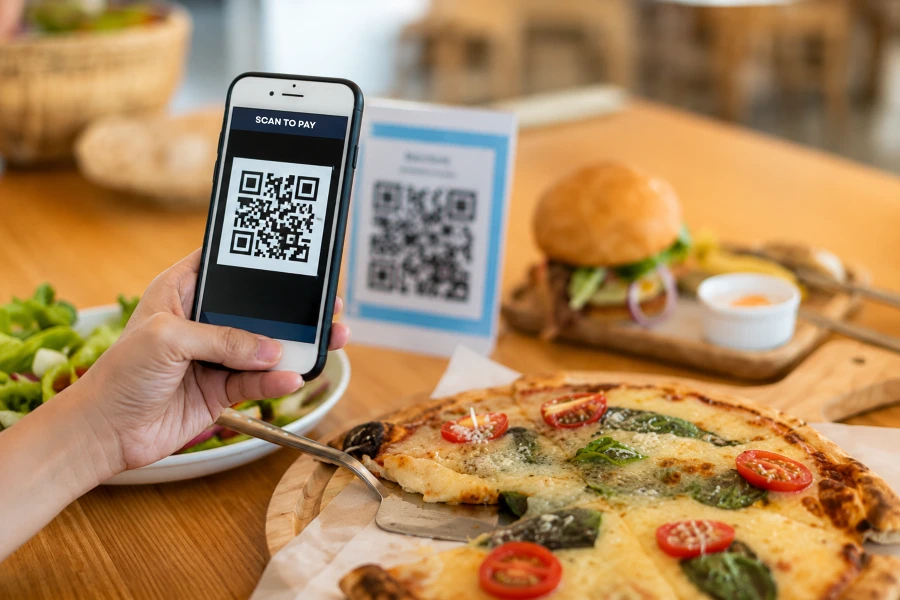
QR-based checkout lets a guest scan a code on the check, pay directly from their phone, split the bill without server involvement, and leave whenever they are ready, all without waiting for a folder to be dropped and returned. This matters most in high-volume, lower-check-average environments such as Williamsburg gastropubs or fast-casual concepts, where server time is better spent on new tables than on payment logistics.
3. POS Integration That Actually Talks to Everything Else
Payment technology only performs if it is integrated with the rest of the operating stack, not bolted onto it. A tap-to-pay terminal that does not sync with the reservation system, the kitchen display, and the reporting dashboard just creates a second set of numbers to reconcile at close. This is the same integration logic covered in our review of the best restaurant technology stacks for 2026, where POS, reservations, and AI-driven forecasting are treated as one connected system rather than three separate vendor relationships.
The Guest Experience Case: Friction Is a Retention Problem
Payment speed is not only an efficiency question. It is a guest experience question with retention consequences. A guest who has a frustrating checkout experience, waiting to flag a server down, watching a payment terminal freeze, or being handed the wrong split, associates that friction with the restaurant itself, not the hardware. That association shows up later as the kind of quiet churn described in our analysis of the customer drop-off effect on guest retention, where guests do not complain, they simply do not rebook.
Conversely, a checkout experience that feels effortless reinforces the same operational polish a guest associates with the rest of the visit. It is a small moment, but it is the last moment, and last impressions carry disproportionate weight in whether a guest becomes a repeat visitor.
This is particularly true for solo diners and smaller parties, who tend to be more sensitive to feeling rushed or overlooked at the end of a meal. A guest dining alone often notices exactly how long it takes to get a check paid, since there is no conversation to distract from the wait. Fast, self-directed checkout options remove that friction without requiring any additional server attention.
A Practical Rollout Framework for Operators
Restaurant owners considering an upgrade to pay-at-table technology should evaluate the decision the same way they would any capital investment, with a clear before-and-after measurement, not a vendor pitch.
- Audit current checkout time. Time ten checks across a normal Friday service, from “can we get the check” to the guest leaving. Most operators are surprised by the average.
- Identify the highest-friction service period. For many NYC concepts this is brunch or the pre-theater window, where table turn speed tends to have outsized revenue impact.
- Pilot on a single section before a full rollout. A 15 to 20 table pilot over two weekends gives clean before-and-after data without disrupting the full floor.
- Confirm reporting integration before committing. If the new payment tool does not feed clean data into the weekly numbers reviewed in a restaurant P&L statement, it is creating manual reconciliation work rather than saving labor.
- Train for the split-bill scenario specifically. Group checks are where most checkout friction actually lives, and where QR-based splitting delivers the clearest time savings.
Where Payment Technology Fits Into a Broader Digital Strategy
Pay-at-table and QR checkout should not be evaluated as standalone purchases. They sit alongside reservation systems, online ordering, and restaurant website design as part of the digital-first guest journey that increasingly determines whether a New York diner chooses one address over another. The operators pulling ahead in 2026 are treating checkout speed with the same rigor they apply to AI-driven reservation systems: as measurable infrastructure, not an afterthought.
Checkout Is the Last Data Point You Control
Every other part of the guest experience, the food, the room, the service pacing, is subject to variables an operator cannot fully control on any given night. Checkout speed is not one of them. It is a fixed operational choice, and in a market as competitive as New York City, it is one of the few remaining places where a straightforward technology decision produces a measurable, repeatable return.
My Chef Social, builds the connected technology and marketing systems that turn operational upgrades like pay-at-table checkout into measurable growth, from POS integration to the retention strategy that keeps those faster tables coming back. Reach out to our team to audit your current checkout flow and identify where NYC’s zero-friction payment standard can protect your margins this year.
Book your free growth audit today
FAQs
Does tap-to-pay technology actually increase table turns at NYC restaurants?
It can help. Removing manual steps like running a card and returning a signed receipt shortens the time a paid table stays occupied, which supports faster table turns during peak service.
What is the difference between QR code table payments and tap to pay?
QR code payments let a guest scan a code on the check and pay directly from their phone without server involvement, while tap to pay lets a server process contactless payment at the table using a handheld terminal. Many restaurants use both depending on service style.
Do pay-at-table systems integrate with existing POS and reservation software?
Most modern pay-at-table tools are built to integrate with POS, reservations, and reporting systems, though the depth of that integration varies by vendor and should be confirmed before rollout.
Which NYC restaurant service periods benefit most from faster checkout?
High-turnover periods such as brunch and the pre-theater window tend to see the most benefit, since table turn speed has an outsized impact on revenue during those windows.
Is contactless checkout only useful for high-volume restaurants?
No. It also improves the experience for solo diners and smaller parties, who are often more sensitive to feeling rushed or overlooked at the end of a meal.