
The Discovery Shift That Changed Guest Acquisition Permanently
For two decades, the dominant guest acquisition funnel for NYC restaurants looked roughly like this: editorial press coverage and word-of-mouth drove awareness, Yelp and Google captured intent, and OpenTable converted the booking. That funnel still exists. It is no longer sufficient on its own. The demographic that has reshaped it is not a niche. Gen Z dining discovery now begins overwhelmingly on TikTok. Multiple consumer research studies from Bloomberg Intelligence, Morning Consult, and TikTok’s own commissioned dining research have documented that a significant majority of Gen Z diners aged 18-27 use TikTok as their primary restaurant discovery tool, ahead of Google, ahead of Instagram, and dramatically ahead of traditional editorial sources.
What makes this shift operationally significant is not just the demographic itself. It is the behavioral profile of the guests that TikTok delivers. Diners who discover a restaurant through an organic TikTok video are not casual browsers. They arrive with high intent, pre-sold enthusiasm, and a documented tendency to share their visit, generating secondary and tertiary discovery for the same restaurant. This is restaurant social media growth with a compounding return structure that no paid acquisition channel can replicate at the same cost basis.
The question for NYC operators is not whether TikTok produces real guests. The question is whether you are the restaurant in your category that those guests are finding, or whether you have ceded that position to a competitor who decided to show up.
Why TikTok Is Not Instagram and Why That Distinction Matters Strategically
The most costly conceptual error operators make when committing to restaurant social media marketing in NYC on TikTok is treating it as a vertical video extension of their Instagram strategy. These are not the same platform. They do not reward the same content. They do not serve the same function in a guest’s decision-making process.
TikTok vs Instagram for restaurants is not a comparison of aesthetic preferences. It is a comparison of two fundamentally different discovery architectures.
Instagram is a social networking platform. Its algorithm surfaces content primarily to your existing followers and their immediate connections. Growth on Instagram is largely a function of your existing audience size. A restaurant with 2,000 followers on Instagram will reach approximately 2,000 people, give or take engagement rate adjustments. Organic reach to non-followers is limited and declining.
TikTok is a discovery platform. Its algorithm surfaces content based on engagement signals, such as watch time, completion rate, shares, comments, and saves, not follower counts. A restaurant with 200 followers on TikTok can reach 200,000 people if the content earns the algorithm’s attention. This is the structural difference that makes TikTok restaurant discoverability categorically unlike any other organic channel: the playing field between a 20-unit hospitality group and a 40-seat independent is genuinely level in a way it is nowhere else.
This means two things for operators. First, the barrier to meaningful reach on TikTok is lower than on any other platform, including restaurant Instagram marketing in NYC, where years of follower accumulation create compounding advantages for established brands. Second, the content requirements are different. TikTok rewards authenticity, pace, and native platform behavior. Polished editorial photography repurposed as video does not perform. Content that feels produced for a different platform does not perform. What performs is content that feels native, which brings us to what that actually means in practice.
What the TikTok Algorithm Actually Rewards in 2026
Understanding the TikTok algorithm for restaurants is not a technical exercise. It is a content strategy exercise. The algorithm is a reflection of what real viewers watch, rewatch, share, and save, and the content patterns it has consistently rewarded in the restaurant and food category are well-established. Watch time and completion rate are the primary signals. A video that holds a viewer from the first frame to the last, regardless of length, is algorithmically valued far above a video that loses viewers in the first three seconds. The practical implication: the opening frame of every piece of restaurant TikTok content must earn immediate attention. A plate is being lifted. A sauce hits a hot surface. A chef’s hands are at work on something visually compelling. The first second is the entire audition.
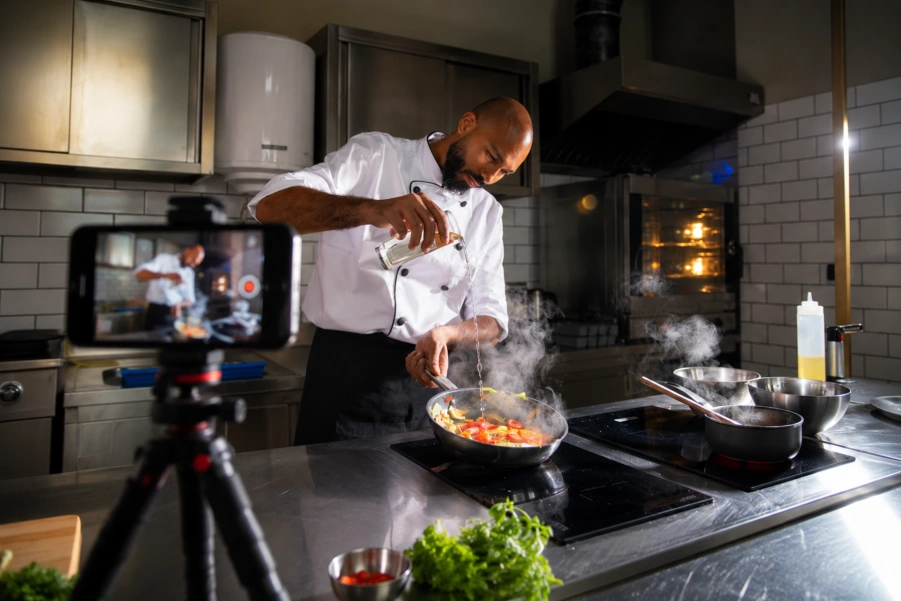
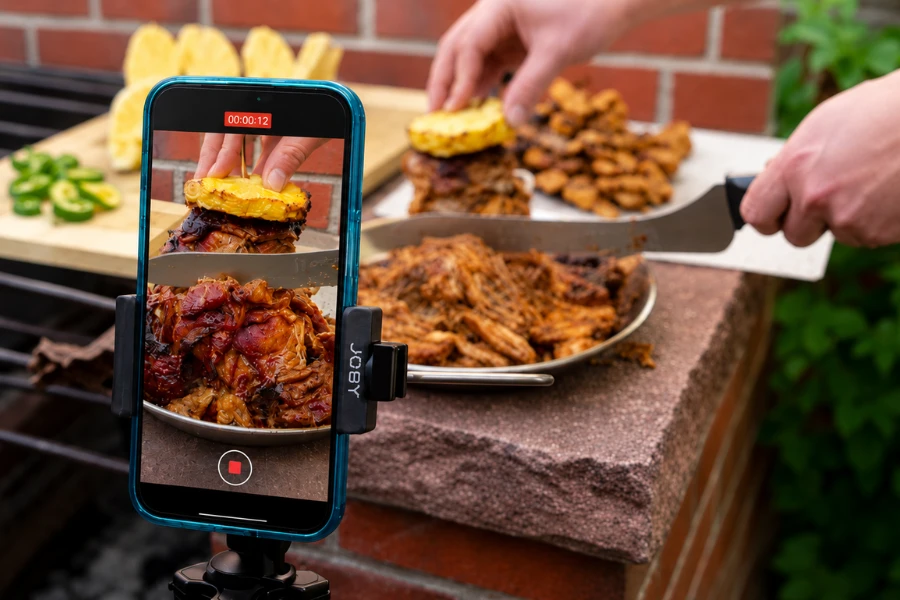
Behind-the-scenes restaurant content consistently over-indexes. The most durable content category in restaurant TikTok is not glamour; it is process. Behind-the-scenes footage of prep kitchens, butchery, fermentation, pasta rolling, and pastry work performs at a consistently higher level than finished-dish presentation because it satisfies a curiosity that guests cannot access through any other channel. It is content that only a restaurant can produce, which means it carries an authenticity signal no competitor can manufacture.
Restaurant trend participation accelerates algorithmic distribution. When a sound, format, or challenge achieves high velocity on TikTok, content that participates in that trend receives preferential distribution during the trend’s active window. Trend participation is not about compromising brand identity; it is about understanding that borrowing an existing trend’s momentum is a legitimate and highly efficient distribution strategy when executed with the right creative judgment.
Specificity outperforms generality. Hyper-specific content, like this dish, this technique, or this ingredient sourced from this farm, consistently outperforms content that tries to showcase the restaurant broadly. The algorithm surfaces specific content to highly relevant audiences. A video about hand-rolling sourdough pasta at 6 AM finds pasta enthusiasts. A video about a specific natural wine producer finds wine-driven diners. Specificity is both an algorithmic advantage and a brand differentiation tool.
Short-Form Video as a Chef’s Most Powerful Brand Asset
Short-form video for chefs is not a marketing add-on. For the culinary talent at the center of a restaurant’s identity, it is the highest-leverage personal brand vehicle available, and in 2026, the chef’s personal TikTok presence has become one of the most significant drivers of reservation demand for the restaurants they lead. The mechanism is straightforward. A chef who builds a TikTok following around their culinary perspective, their technique, their sourcing philosophy, and their creative process is not just generating content. They are building a direct relationship with a dining audience that wants to experience what they are watching. The conversion path from TikTok follower to reservation booking is shorter and more direct than any media mention, any influencer partnership, and most paid advertising formats.
This is why any serious restaurant content creation NYC strategy in 2026 must include the chef’s voice and presence on camera, not as a marketing obligation but as the most authentic expression of what makes the restaurant worth visiting. Guests do not want to watch a restaurant’s brand. They want to watch the person behind the food. The chef who is visible on TikTok owns a distribution channel that no competitor can replicate because no competitor has the same person.
The TikTok Content Framework for NYC Restaurant Operators
A functional TikTok food content strategy for a Manhattan restaurant does not require a full-time content team, a production budget, or daily posting. It requires a consistent framework executed with discipline. The operators winning on the platform in 2026 are largely running one of three content architectures:
- The Process-First Model. Every piece of content centers on a specific kitchen or service process, a technique, a preparation, or a sourcing story. This model performs best for concepts where the culinary craft is the primary brand differentiator. It feeds behind-the-scenes restaurant content that audiences return to repeatedly because the content is genuinely educational and visually compelling.
- The Personality-Led Model. Content centers on a specific voice, the chef, the owner, or a front-of-house personality, and builds an audience around a recurring perspective on food, hospitality, or the NYC dining experience. This model compounds fastest because personality-driven content builds parasocial loyalty that translates directly into reservation intent.
- The Trend-Participation Model. Content is organized around active TikTok trends, sounds, and formats, adapted to the restaurant’s identity and menu. This model generates the fastest short-term reach but requires the most responsive content. Operation trend windows are narrow. It is most effective as a supplement to one of the above rather than a standalone strategy.
The most successful restaurant TikTok accounts in NYC run a blend of all three, weighted toward whichever model most authentically reflects the restaurant’s identity.
Platform Comparison: Where TikTok Sits in Your Organic Channel Mix
Rather than framing TikTok as a replacement for existing channels, the strategic view is to understand precisely what role each platform plays in the guest acquisition and retention funnel and allocate content effort accordingly.
- TikTok is the primary discovery channel for new guest acquisition, particularly among 18–35 demographics. Its algorithmic reach means organic content can find audiences that have no prior awareness of the restaurant. It is the top of the funnel, and in 2026, it is the widest top-of-funnel available to an independent operator at zero media cost.
- Instagram remains the primary consideration channel where guests who have discovered a restaurant elsewhere go to validate their interest. A strong Instagram presence anchors the decision. Restaurant Instagram marketing in NYC is not made obsolete by TikTok; it is repositioned as the destination a TikTok-generated audience lands on when they want to assess before booking. The two platforms work in sequence, not in competition.
- Google and reservation platforms remain the conversion layer where intent becomes a booking. The job of TikTok is to generate enough desire that the guest takes the step of searching. The job of Instagram is to confirm the decision. The job of Google and the reservation platform is to make booking frictionless.
Understanding this funnel means operators should not be asking, “TikTok or Instagram?” They should be asking, “How does my TikTok content lead to an Instagram visit, and how does my Instagram profile close the reservation?”
The Hidden Cost of Inaction
There is a final point that operators still on the fence need to hear clearly. Viral restaurant marketing on TikTok is not the goal. Consistent, compounding organic discoverability is the goal. The restaurants winning on TikTok in 2026 are not winning because they went viral once. They are winning because they have been showing up with consistent, native, platform-appropriate content for 12–18 months, and the algorithm has rewarded that consistency with sustained reach to exactly the audience most likely to book a table.
Every month an operator delays is a month of algorithmic history, audience accumulation, and content compounding that a competitor is building in their place. In a market as competitive as Manhattan, where a new restaurant opens every 72 hours and restaurant social media growth is now a direct input to revenue, inaction is not a neutral position. It is a decision to cede ground.
The operators who are winning on TikTok right now did not wait until the strategy was perfect. They started, and they refined as they went. That is the only approach available to operators who want to close the gap. For those who need a structured framework to start or accelerate, a qualified restaurant social media marketing NYC partner can compress the learning curve significantly, building the content architecture, training the internal team, and connecting the TikTok for restaurants strategy to the broader restaurant content creation NYC system that turns views into verified reservations.
The platform will not wait. The audience will not wait. The only question left is whether you will.
Ready to build your TikTok growth system?
Schedule a free strategy session with My Chef Social →
Frequently Asked Questions
Is TikTok actually effective for restaurant marketing in NYC?
TikTok is the most effective organic guest acquisition channel available to NYC restaurant operators in 2026 for new guest discovery, particularly among the 18–35 demographic that represents the highest-frequency dining segment in the market. Its algorithmic structure allows independent restaurants with minimal followers to reach tens of thousands of highly relevant potential guests through well-executed content, a reach dynamic that no other organic channel, including Instagram, currently replicates. The operators dismissing it as a trend channel are consistently being outperformed in new guest acquisition by those who are not.
What kind of TikTok content works best for restaurants?
The three content categories that consistently over-index in the restaurant category are behind-the-scenes process footage (prep kitchen, butchery, pasta rolling, pastry work), personality-led content featuring the chef or a recognizable front-of-house voice, and trend participation content that adapts active TikTok formats to the restaurant's identity. Of these, behind-the-scenes content has the most durable algorithmic performance because it delivers genuine utility, showing viewers something they cannot see anywhere else, which drives high completion rates and shares.
How is TikTok different from Instagram for restaurant marketing?
TikTok is a discovery platform; Instagram is a network platform. TikTok's algorithm surfaces content to non-followers based on engagement signals, meaning a restaurant with 300 followers can reach 300,000 people through a single well-performing video. Instagram's algorithm primarily serves existing followers, making organic reach to new audiences increasingly limited. In strategic terms, TikTok is the top-of-funnel discovery channel, and Instagram is the consideration and validation layer. They serve different functions and should not be used interchangeably.
How often should a restaurant post on TikTok?
Consistency outperforms volume. Three to four posts per week of genuine, native content will outperform seven posts per week of content that feels produced for a different platform. The algorithm rewards watch time and completion rate above all else, which means one video that holds viewer attention through to the end is worth more than five videos that lose their audience in the first three seconds. Build a sustainable production cadence that the team can maintain for 12 months, not a sprint that burns out in six weeks.
Should a restaurant's chef be on TikTok personally, or just the restaurant account?
Both, ideally with a coordinated strategy. A chef's personal TikTok presence builds parasocial loyalty that converts directly into reservation demand, and the chef's voice carries an authenticity that a brand account cannot fully replicate. The restaurant account anchors the concept's identity and serves as the destination for guests who arrive via the chef's content. When both accounts are active and cross-referencing each other, the compounding reach effect is significantly greater than either account achieves independently. For operators working with a restaurant, an Instagram marketing NYC, or a TikTok specialist, this dual-account architecture should be part of the initial content brief.