
Not every restaurant is a multi-unit group weighing whether to hire a fractional CMO. Most independent NYC restaurants have exactly one person handling marketing, and it’s usually the general manager, squeezed in between scheduling, service, and every other fire that needs putting out that day. That reality deserves its own playbook, not a scaled-down version of a strategy built for a bigger operation.
A different problem than the fractional marketing conversation
An earlier piece on this blog covered why larger hospitality groups are moving away from internal marketing hires toward fractional leadership, largely a cost-efficiency argument for multi-location operators with real marketing budgets to allocate. That’s a genuinely different situation from a single-location restaurant where the GM is already doing the job, whether anyone calls it that or not, without any dedicated budget or headcount at all.
For that GM, the question isn’t “internal hire or fractional agency.” It’s “how do I do this well in the two hours a week I actually have,” which requires a much more ruthless approach to what’s worth doing at all.
What a time-constrained GM should actually prioritize
Pick two or three channels and ignore the rest, at least for now. A GM trying to maintain a meaningful presence across Instagram, TikTok, email, Google Business Profile, and a blog simultaneously will do all of them poorly. Choosing the two or three that most directly reach your actual guests, often Google Business Profile and one social platform, and doing those consistently well beats a scattered, mediocre presence everywhere.
Build a repeatable weekly rhythm instead of reinventing content every time. A GM without dedicated marketing time can’t afford to start from a blank page each week. A simple, repeatable structure, a Monday post about the week ahead, a Wednesday staff or dish spotlight, a Friday weekend push- removes the decision fatigue that causes marketing to quietly stop happening during a busy month.
Treat your Google Business Profile as the single most valuable task on the list. Unlike social content, which requires ongoing production, keeping your hours, photos, and posts current on Google Business Profile is a low-effort, high-return task that directly affects whether someone finds and chooses you in the exact moment they’re deciding where to eat.
Use your POS and reservation data instead of guessing what’s working. A GM doesn’t need a full analytics dashboard to know whether a promotion actually moved covers. A simple before-and-after look at reservations or walk-ins around a specific post or promotion tells you more than intuition alone, and it takes minutes, not hours.
Know when the workload has actually outgrown what one person can realistically do. There’s a real point where a restaurant has grown enough, added a location, taken on more private events, expanded its social presence meaningfully, that a GM juggling marketing alongside operations stops being sustainable. Recognizing that threshold honestly, rather than continuing to stretch one person thin, is itself a strategic decision.
This is a lower-tier-of-the-funnel entry point, and that’s fine
Not every restaurant is ready for, or needs, a full outsourced marketing engagement. A GM running a disciplined, realistic version of local marketing on their own is a completely legitimate approach for a smaller independent restaurant, and it’s often the right starting point before considering a more built-out branding strategy or a broader promotional calendar.
A simple planning tool that actually helps
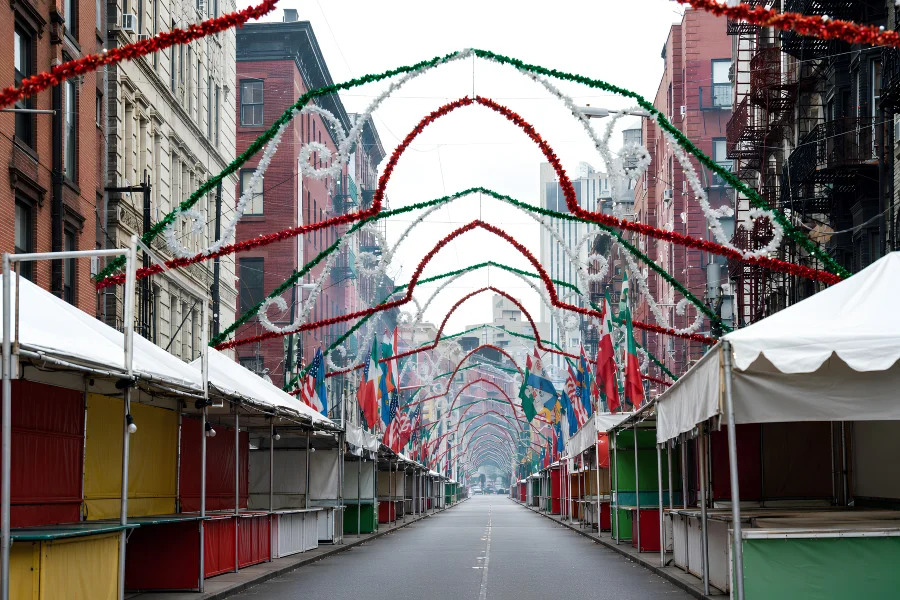
The NYC restaurant marketing calendar already covered on the blog is especially useful for a time-constrained GM specifically, since it removes the burden of figuring out what to post about from scratch each week. Knowing that Pride Weekend, Restaurant Week, or a neighborhood festival is coming up in advance turns marketing from a reactive scramble into something that can be planned during a normal Sunday admin session rather than a Thursday-night panic.
Where this fits into your growth path
A GM handling marketing solo today doesn’t mean that’s the permanent state of the business. As covers grow and the operation gets more complex, revisiting whether dedicated social and ads support makes sense is a natural next step, not an admission that the GM-led approach failed, but a sign the restaurant has outgrown what any one person can realistically sustain alongside everything else on their plate.
Frequently Asked Questions
Is this the same advice as the fractional CMO piece already on the blog?
No. That piece is about larger, multi-location groups deciding between an internal marketing hire and a fractional agency. This is specifically for single-location restaurants where the GM is already doing the marketing without any dedicated budget or team at all.
How many marketing channels should a busy GM realistically try to maintain?
Two or three at most, chosen based on where actual guests are, rather than spreading thin attention across every available platform. Consistency on fewer channels outperforms a scattered presence everywhere.
What’s the single most valuable task for a time-constrained GM?
Keeping Google Business Profile hours, photos, and posts current. It requires far less ongoing effort than social content but directly affects whether someone finds and chooses the restaurant in the exact moment they’re deciding.
How does a GM know if their marketing is actually working without formal analytics?
A simple before-and-after look at reservations or walk-ins around a specific post or promotion, using data already available through the POS or reservation system, gives a real signal without requiring a dedicated analytics setup.
When should a restaurant move beyond GM-led marketing?
When the workload has genuinely outgrown what one person can sustain alongside daily operations, often after adding a location, taking on significantly more private events, or reaching a scale where consistent execution starts slipping.