
The Seat That Sells Itself
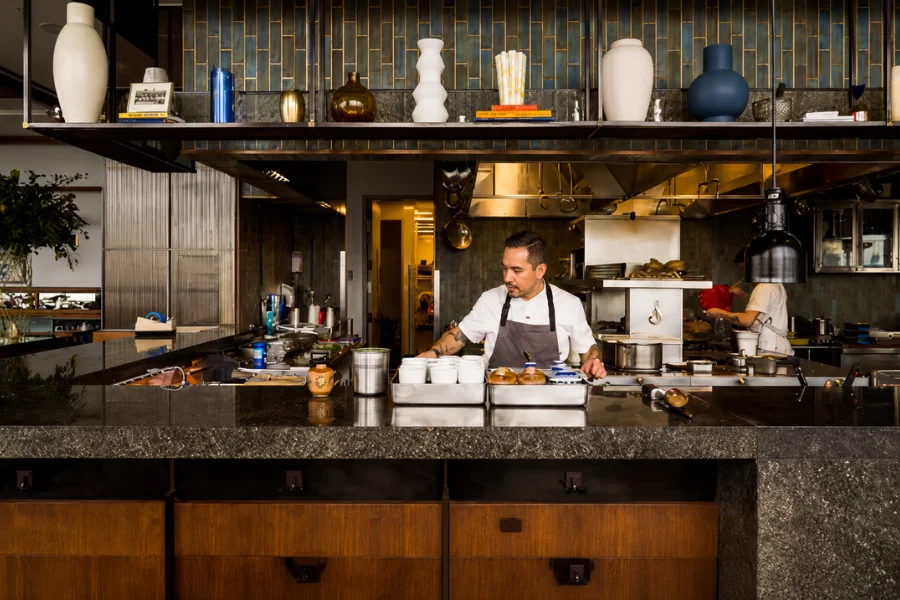
The chef’s counter is not new. Japanese omakase has used this model for decades. What is new is how many non-omakase restaurants in Manhattan are adopting it: Italian spots, modern American kitchens, seafood restaurants, and even brunch-heavy operations. They are carving out four to eight seats with a direct kitchen view and charging a premium for them. It works because the premium is not only about the food. It is about proximity, narrative, and the feeling of being “inside” the craft. The kitchen becomes a theater. The chef becomes the guide. The guest becomes an insider.
This is also what is driving luxury dining trends in NYC right now. The most talked-about dining experiences in the city are not the ones with the grandest dining rooms. They are the ones that make the guest feel closest to the craft.
Why the Counter Outperforms the Dining Room
A standard four-top in a Manhattan restaurant generates revenue based on covers, average check size, and turn time. A chef’s counter seat operates on a completely different model. And the math consistently favors the counter. Here is why:
- Fixed Pricing Eliminates Uncertainty: Most counter experiences run on a set tasting menu. The guest pays a fixed price. There is no menu negotiation, no table splitting a single entree between tables, and no check anxiety. Revenue per seat becomes predictable and almost always higher than the dining room average.
- Upselling Becomes Organic: When a chef is standing in front of you explaining a dish, the natural next question is what to drink with it. Upselling restaurant experiences at the counter does not feel like a sales pitch. It feels like a recommendation from someone who clearly cares. Wine pairings, sake flights, and off-menu additions all convert at significantly higher rates at a counter than on the floor.
- Labor Efficiency Shifts: The chef is the server, the sommelier, and the entertainer. One person doing the work of three. That is a restaurant revenue optimization lever that does not require hiring. It requires repositioning existing talent.
Chef’s counters become high-margin concepts not because ingredients are cheaper, but because the format extracts more value from every seat, every minute, and every interaction.
Build the Tasting Menu Around the Theater
A tasting menu at a regular table is a sequence of dishes. A tasting menu at a counter is a performance with a narrative arc. The difference is not what you serve. It is how the guest experiences the progression. Restaurants executing this well in Manhattan understand a few things:
- Pacing Is the Product: The pause between courses is not dead time. It is when the chef explains what is coming, where the fish was sourced, and why the preparation changed this week. A strong tasting menu strategy treats pacing as a deliberate part of the experience, not a kitchen bottleneck.
- Personalization Happens in Real Time: At a counter, the chef can read the guest. Adjust spice levels mid-service. Offer an extra bite of something the guest reacted to. Swap out a course for someone with a preference they did not mention on the reservation. This kind of personalized dining experience is nearly impossible to deliver at scale across a 90-seat dining room. At a six-seat counter, it happens naturally.
- The Story Becomes the Souvenir: Guests leave a counter experience with a narrative. Not just “the food was great,” but “the chef told us about the farm where the vegetables come from” or “he made an extra course because we mentioned it was our anniversary.” That story gets retold. It becomes word-of-mouth. And that is the most powerful outcome any experiential dining strategy can generate.
Not Every Restaurant Needs a Counter, but Every Restaurant Needs the Principle
You do not need to rip out tables and install a bar facing the kitchen. The chef’s counter is a format. But the principle behind it applies to every restaurant regardless of size, cuisine, or price point.
The principle is this: “The closer the guest feels to the craft, the more they are willing to pay and the more likely they are to return.”
- A pizza restaurant where guests watch the dough stretch and the oven fire.
- A taco spot with an open plancha and a cook finishing plates in front of guests.
- A bakery with visible proofing and a team that explains the process when people ask.
This is also what separates full-service restaurants from the growing restaurant vs. food stall trend in New York right now. Food stalls offer speed and value. Restaurants can offer that same intimacy and theater, but only if they design for it intentionally rather than hiding the most compelling part of their operation behind a kitchen wall. The premium dining experience does not require premium prices. It requires proximity and intention.
The Brand Layer That Makes the Counter Sell Consistently
A chef’s counter only works long-term if the brand supports it.
- Photography should capture intimacy, not just plates.
- The website should communicate what the seat is, who it is for, and why it is worth the premium.
- Social content should show the experience (chef interaction, pacing, and behind-the-scenes) and not only food close-ups.
- The reservation flow should treat counter seats differently from regular tables (clear label, clear pricing, clear expectations).
Working with a restaurant creative agency in NYC that understands hospitality-specific branding ensures that what happens at the counter translates into content, positioning, and messaging that fills those seats consistently.
What to Measure (So You Know It’s Working)
If you implement a chef’s counter (or an experience-forward format), track:
- Revenue per seat (counter vs dining room)
- Beverage attach rate (pairings, flights, add-ons)
- Repeat rate (Do counter guests return within 60 to 90 days?)
- Content yield (how often guests post, tag, and save the experience)
- Demand signals (waitlist rate, “sold out” frequency, peak-night conversion)
The Revenue Is in the Experience You Are Already Capable of Delivering
Most Manhattan restaurants already have the talent, the kitchen, and the product to charge more and retain guests longer. What they lack is the format and the brand infrastructure to package it properly.
My Chef Social works with restaurant operators across New York to build experience-driven brand systems, from positioning and creative direction to the digital presence that turns a six-seat counter into a fully booked revenue engine. If My Chef Social can help with one thing, it is making sure the best part of your restaurant is not a secret only your kitchen staff knows about.
Want to see if a chef’s counter would raise your revenue per seat?
Let’s review your current floor plan, menu format, booking flow, and content, then map a counter concept that fits your brand.
Let’s build the experience your restaurant already deserves →
FAQs
Does a chef’s counter work for casual restaurants, not just fine dining?
Yes. The principal scales down. Any format that brings guests closer to the cooking process (counter, open kitchen, visible prep) increases engagement and willingness to spend.
How many seats should a chef’s counter have?
Most successful setups run between four and eight seats. Small enough to feel exclusive, large enough to generate meaningful nightly revenue.
Does this require a separate menu from the main dining room?
Often, yes. A fixed menu works well at the counter because it simplifies execution, improves pacing, and raises perceived value.
How does this affect overall restaurant revenue?
Counter seats typically generate higher per-seat revenue than standard dining room tables. Pairings and add-ons often increase margin without requiring more headcount.
Is this a trend or a long-term shift?
Experience-driven dining has been growing for years. Guests increasingly choose where to eat based on how it feels, not only on what is served.